Guide
Custom denim washes explained
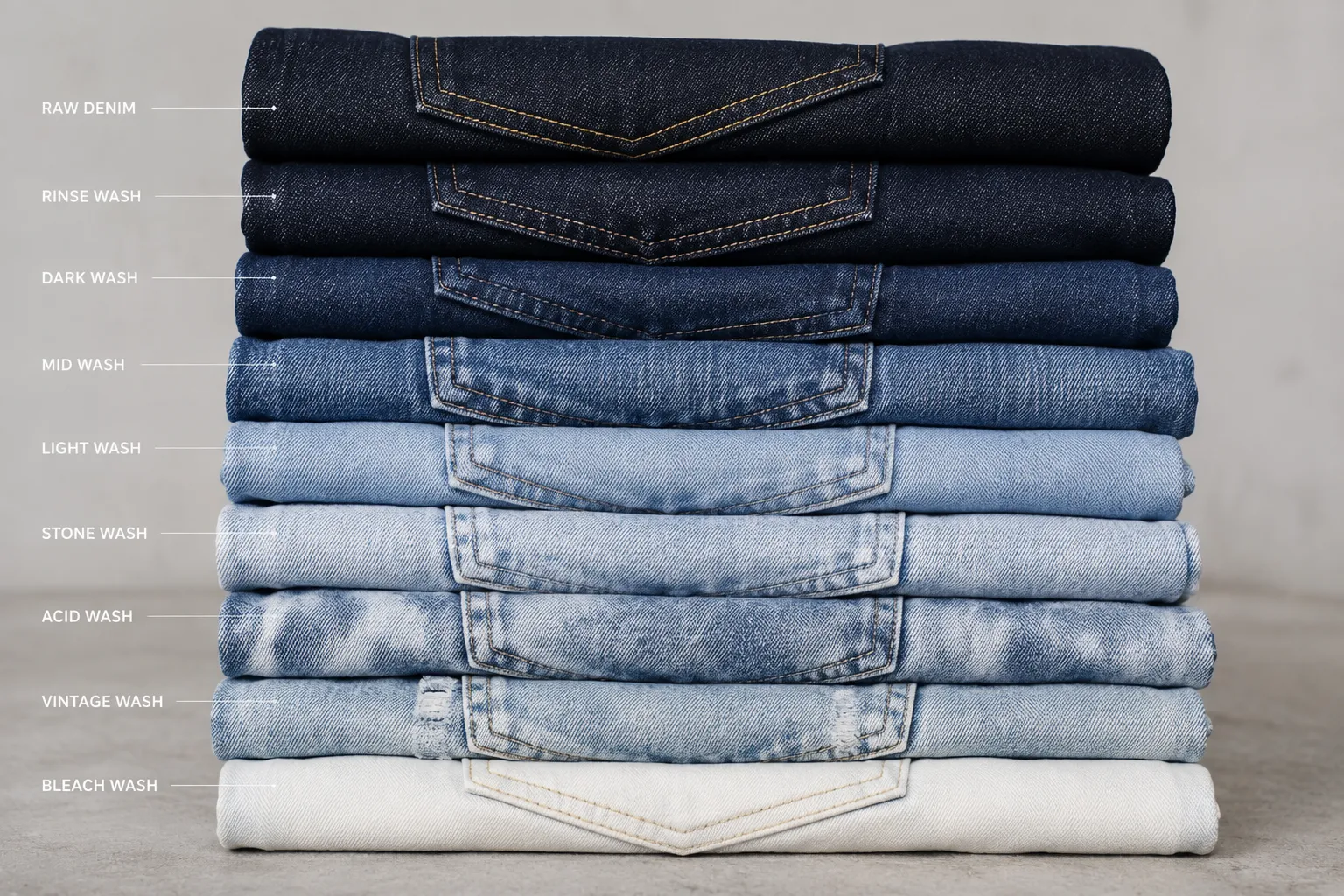
A denim wash can transform the colour, softness, texture and overall character of a garment. From clean, dark indigo to heavily faded vintage finishes, the right washing process can have a major impact on how a pair of jeans looks and feels. But a denim wash isn't simply about making jeans lighter. Different processes affect the fabric in different ways, and manufacturers can combine techniques to create highly specific finishes.
Understanding the most common denim wash techniques can help you communicate your product requirements, choose the right process and achieve consistent results across your collection.
Common types of denim washes
Raw denim
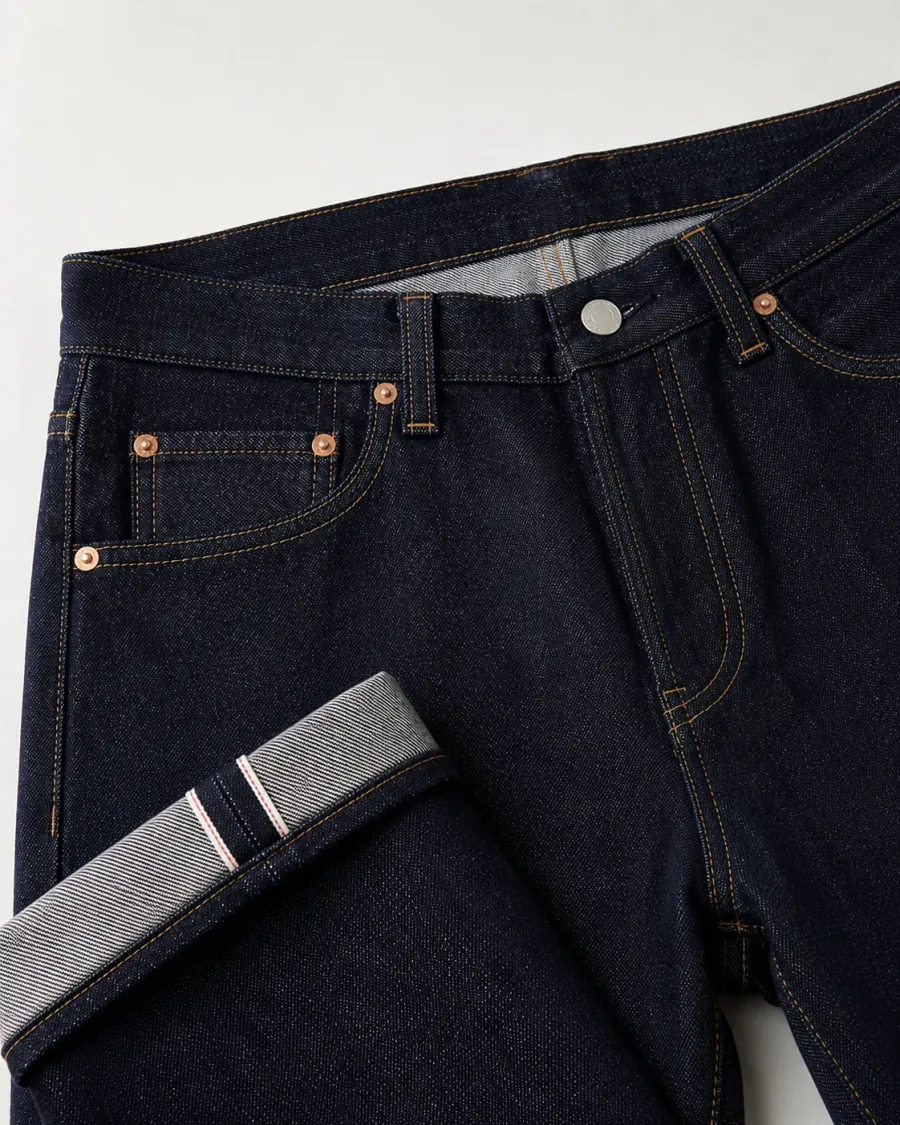
Raw denim is denim that has not undergone a garment-washing process after being produced. It retains much of its original colour and structure and develops unique fading and character through wear over time.
For brands looking for an authentic, structured denim aesthetic, raw denim can provide a clean starting point without a pre-worn appearance.
Rinse wash
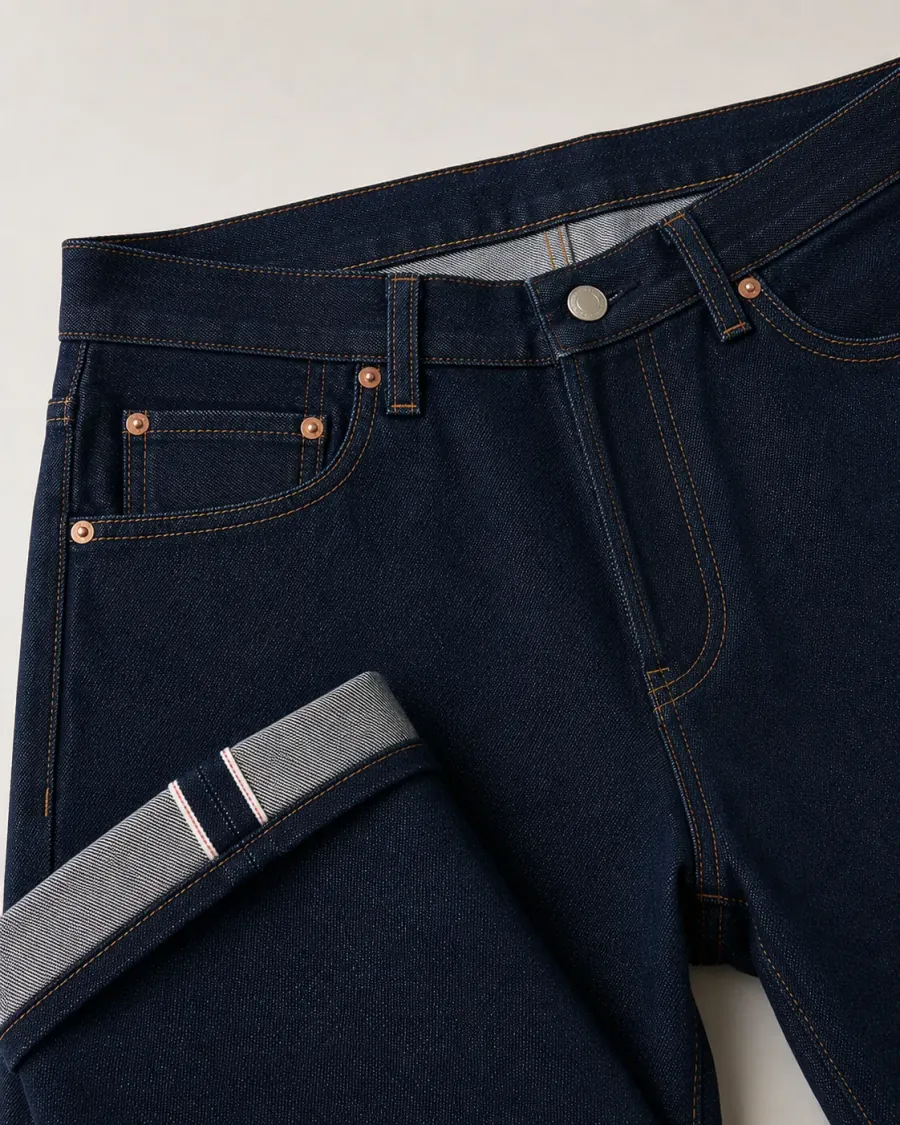
A rinse wash is a relatively light treatment that removes excess dye and impurities while maintaining much of the denim's original colour.
It creates a clean, dark appearance with a slightly softer feel, making it suitable for brands looking for a refined alternative to untreated raw denim.
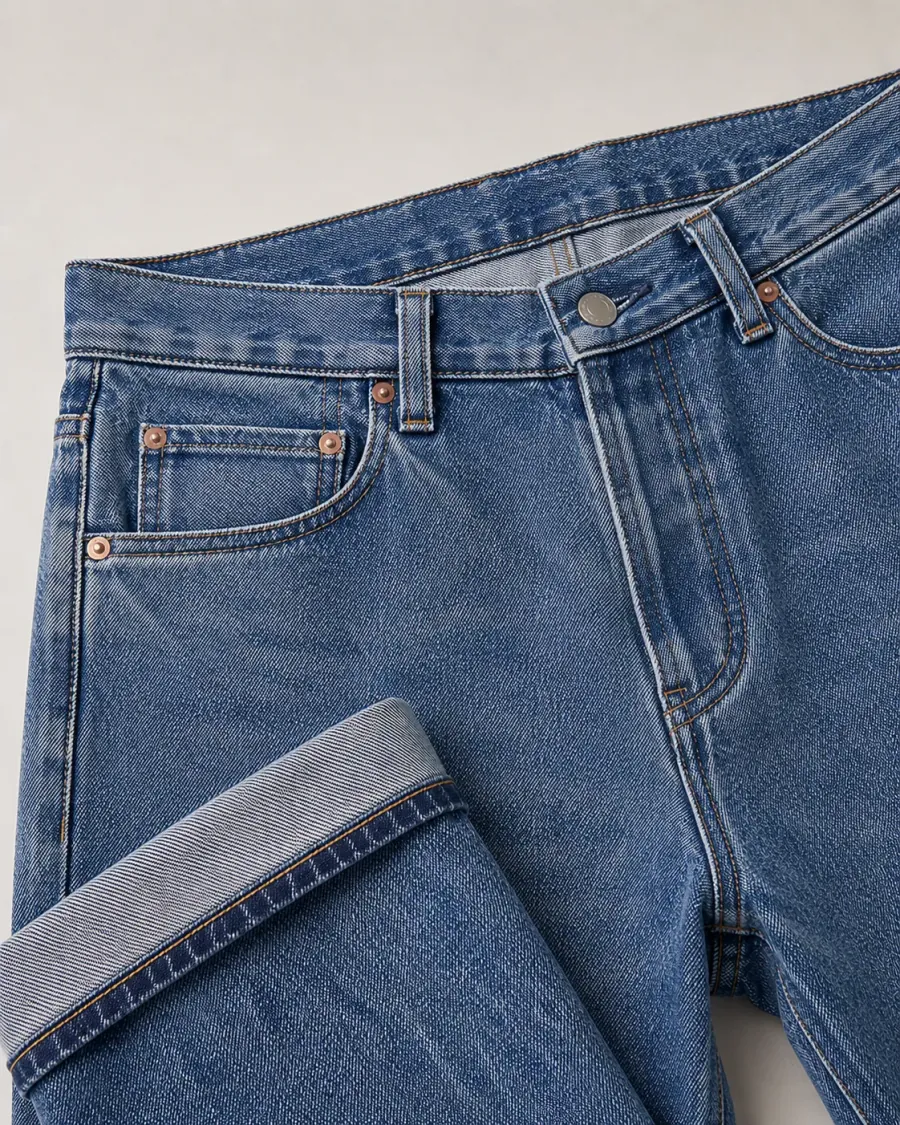
Stone wash
Stone washing uses abrasive materials, traditionally pumice stones, to create a softer hand feel and a naturally worn appearance. The intensity of the process can be adjusted to achieve different levels of fading, softness and texture, from a subtle worn-in effect to a more pronounced vintage finish.
Best for: relaxed, authentic and vintage-inspired denim.
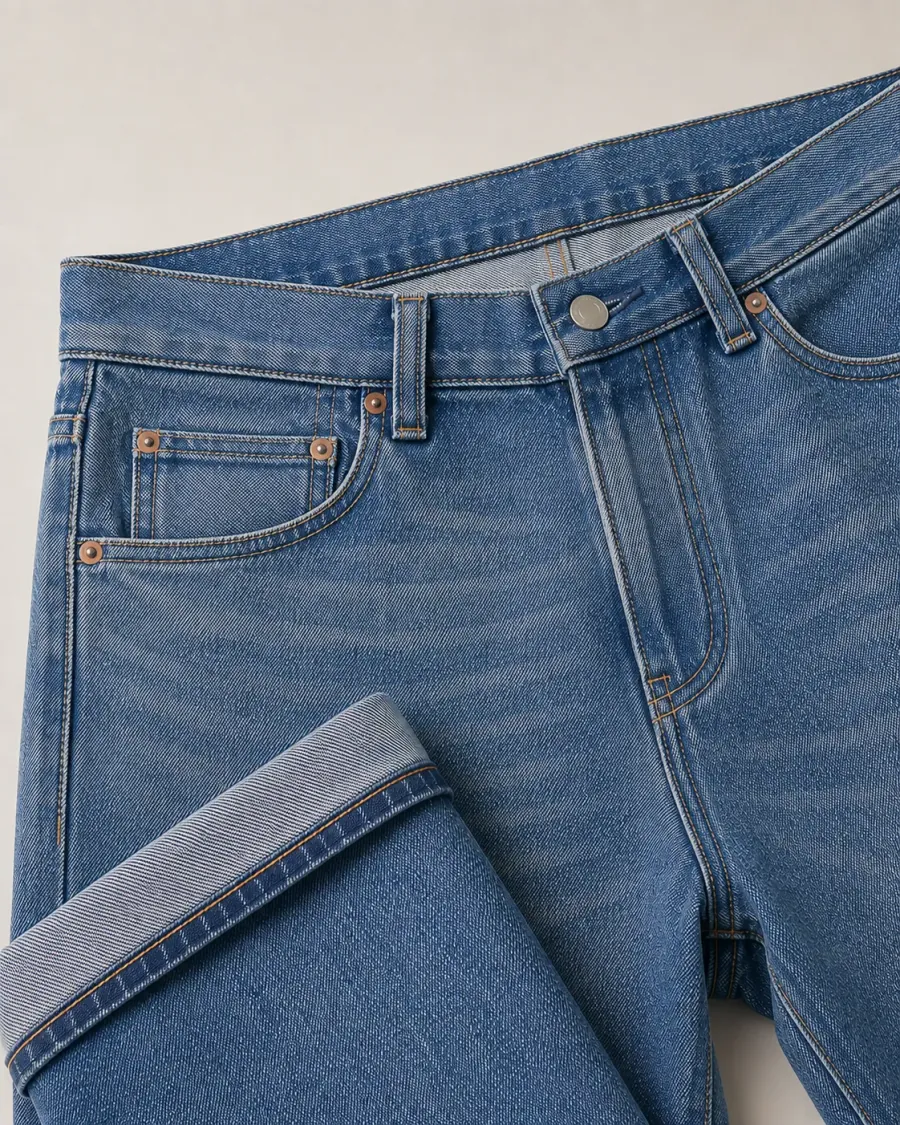
Enzyme wash
Enzyme washing uses enzymes, commonly cellulase, to break down surface cotton fibres. This helps release surface indigo and creates controlled fading while softening the fabric. Enzyme washing can also be combined with other techniques to achieve a specific colour, hand feel or worn appearance.
Best for: softer denim with controlled fading and a smoother finish.
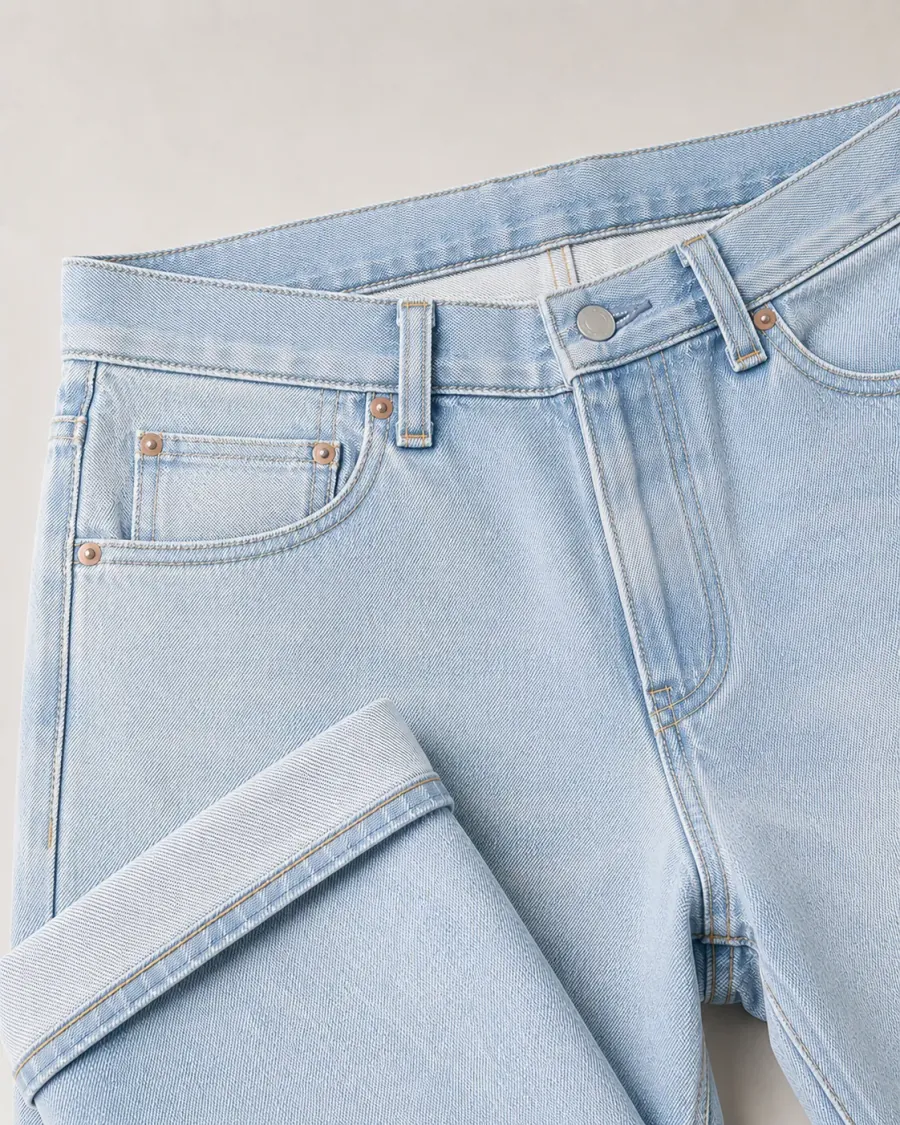
Bleach wash
Bleach washing uses an oxidising treatment to reduce the intensity of the indigo colour and create lighter shades of denim. Depending on the process, the result can range from light blue to significantly bleached finishes. Careful process control is important because the treatment can affect both colour and fabric properties.
Best for: light-coloured and high-fade denim styles.
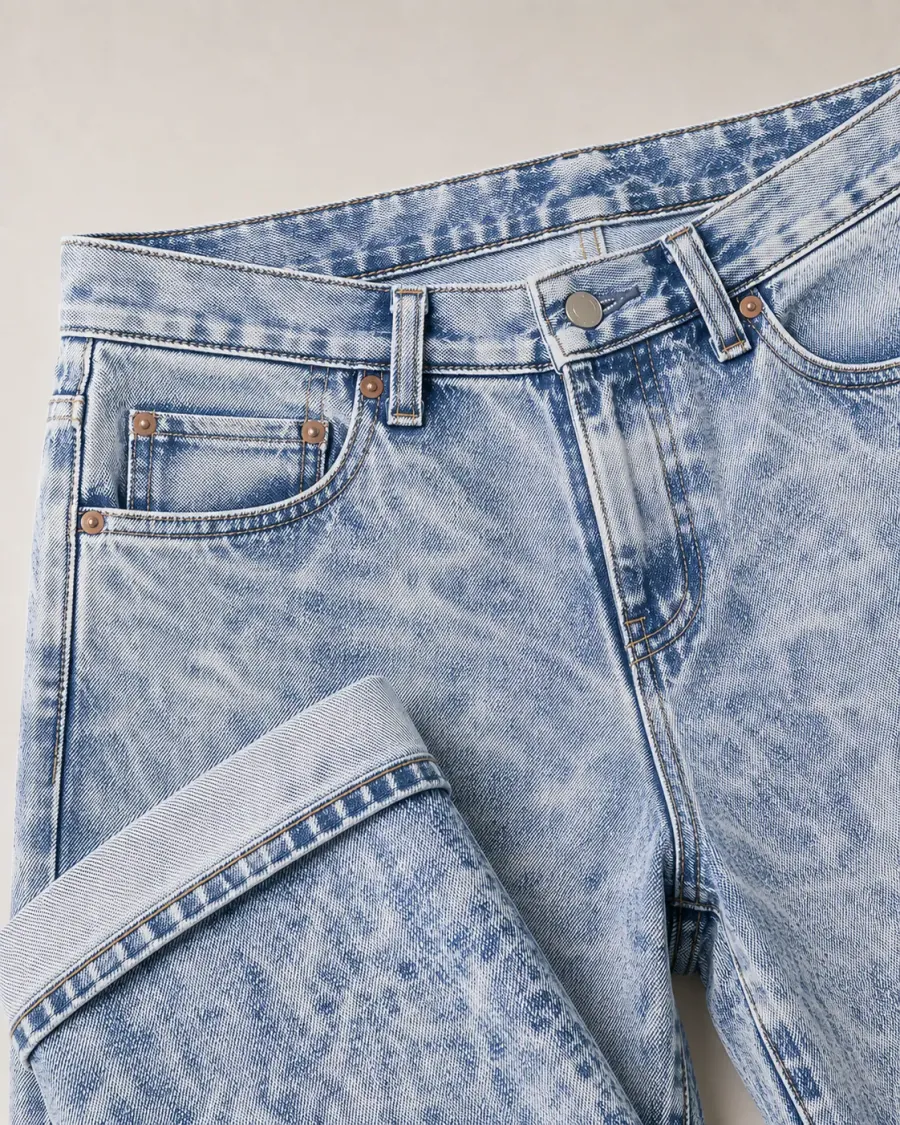
Acid wash
Acid wash creates a distinctive high-contrast, irregular or marbled appearance. Despite its name, traditional acid washing does not necessarily involve acid. The process typically uses an oxidising agent applied to stones, which creates concentrated areas of colour removal as the garment is processed.
Best for: statement denim and strong, fashion-forward finishes.
Denim finishing techniques & technologies
Beyond traditional washing, specialized finishing techniques can create precise fades, vintage effects, whiskering and distressed details.
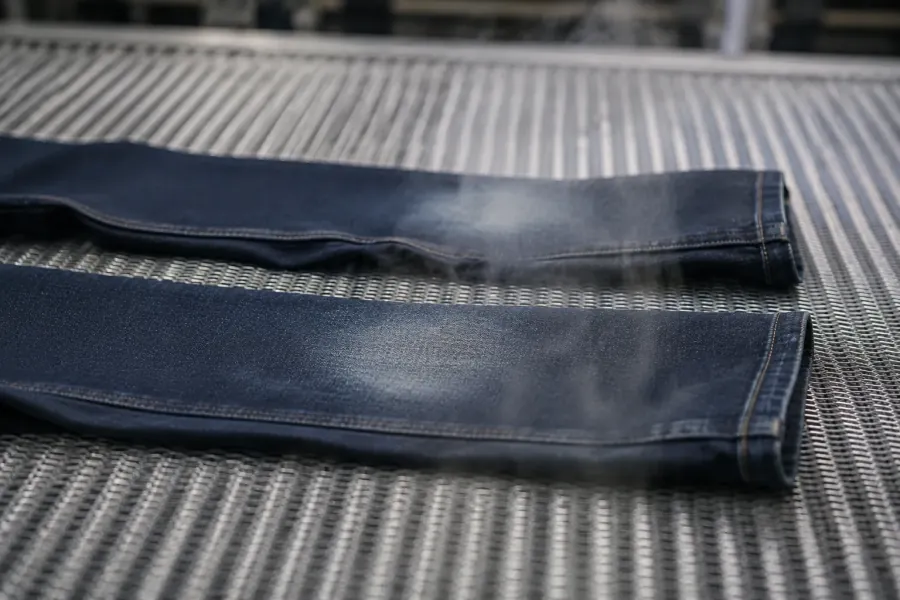
Laser finishing
Laser technology can create fading, whiskers, patterns and distressed effects directly on denim. Because the process can be digitally controlled, laser finishing allows manufacturers to create detailed and repeatable effects while reducing the need for some traditional manual abrasion processes.
Best for: precise whiskers, patterns, vintage effects and localised fading.
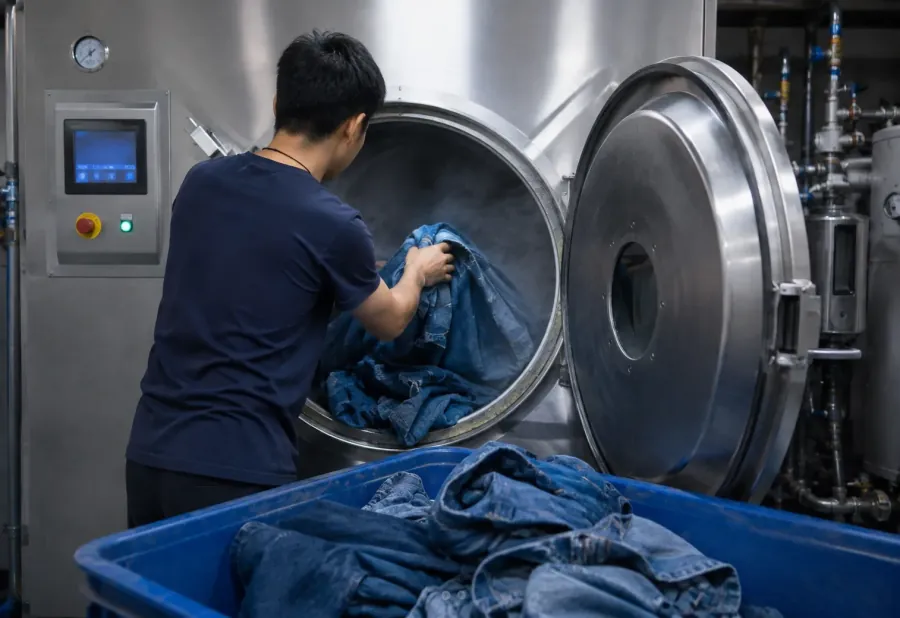
Ozone finishing
Ozone treatment uses ozone to reduce indigo and create controlled fading effects. It can help reduce water and chemical use compared with some conventional wet-processing methods, making it a more resource-efficient finishing option.
Best for: controlled colour reduction, faded effects and more sustainable denim finishing.
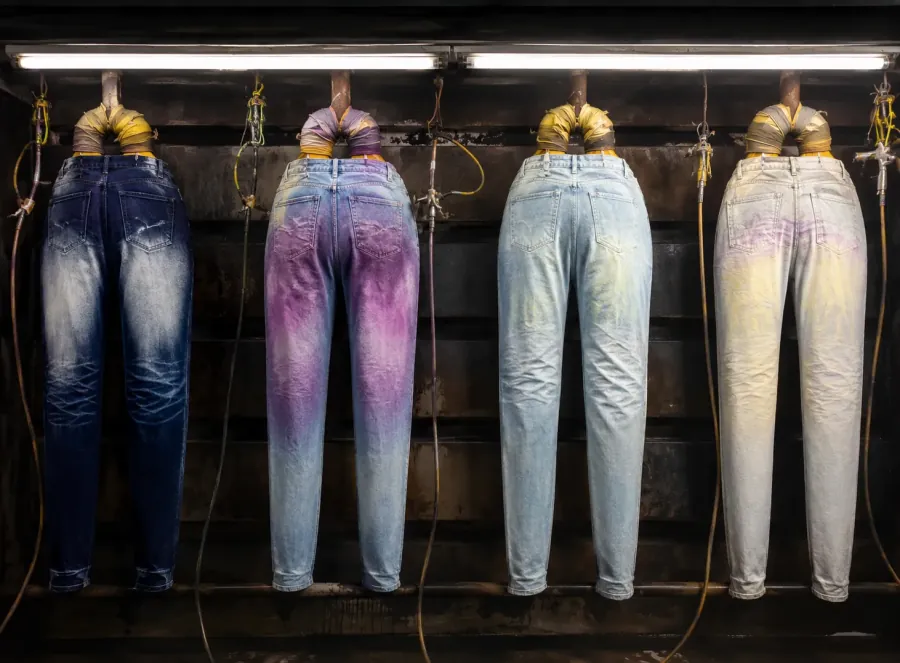
PP spray
PP spray uses potassium permanganate to create localized colour reduction and high-contrast fading on denim. It is typically applied to targeted areas such as the thighs, whiskers and hand-sanded zones to create defined worn effects.
Best for: high-contrast fading, localized highlights and pronounced vintage effects.
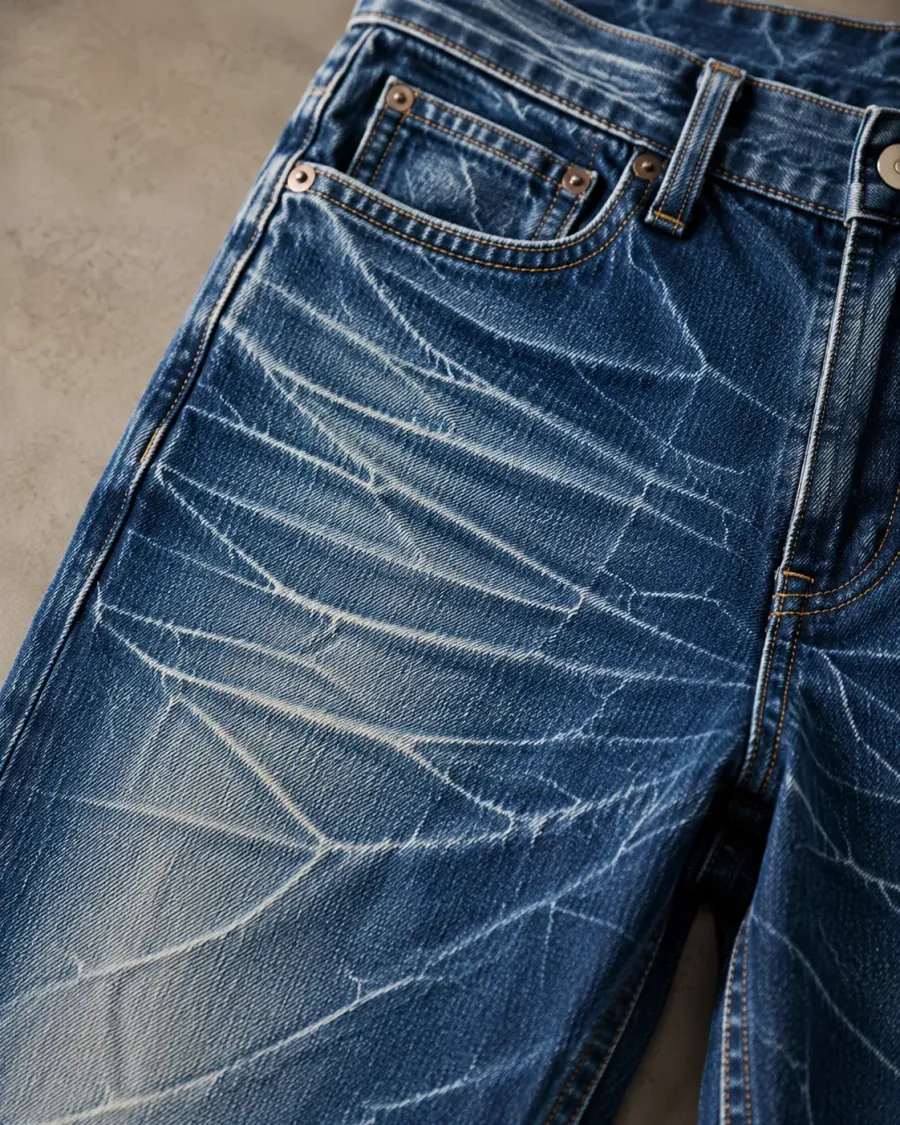
Resin & 3D crinkle effects
Resin is applied to denim and heat-set to create 3D creases, crinkles and dimensional effects. It can help maintain a structured, worn-in appearance and enhance the character of vintage-inspired denim.
Best for: 3D whiskers, permanent creases, crinkle effects and structured vintage finishes.
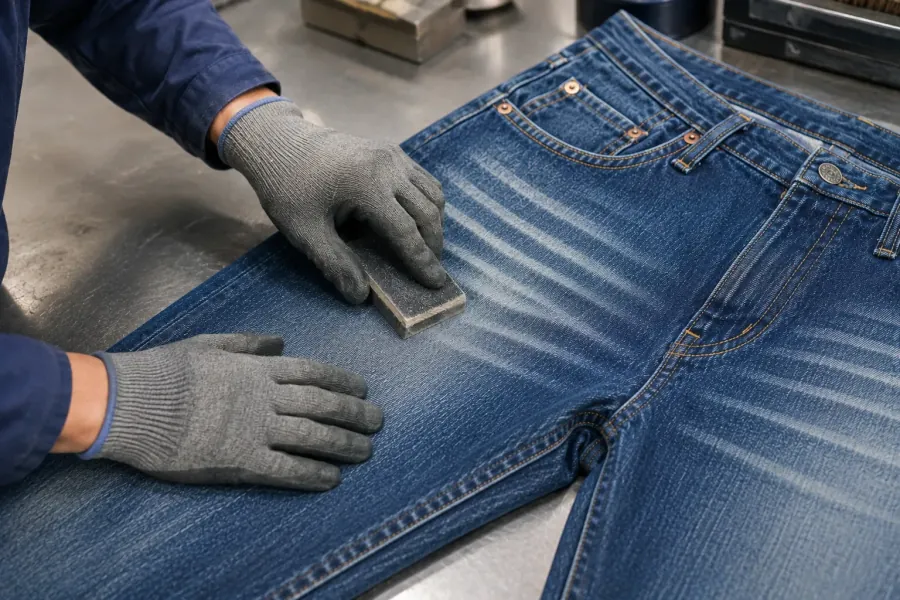
Hand sanding & whiskering
Hand sanding uses abrasive tools to selectively lighten specific areas of denim, creating natural-looking wear and faded effects. Whiskering is applied around areas such as the hips, upper thighs and front pockets to replicate the creases and fading that develop through regular wear.
Best for: authentic vintage effects, targeted fading and naturally worn-in denim.
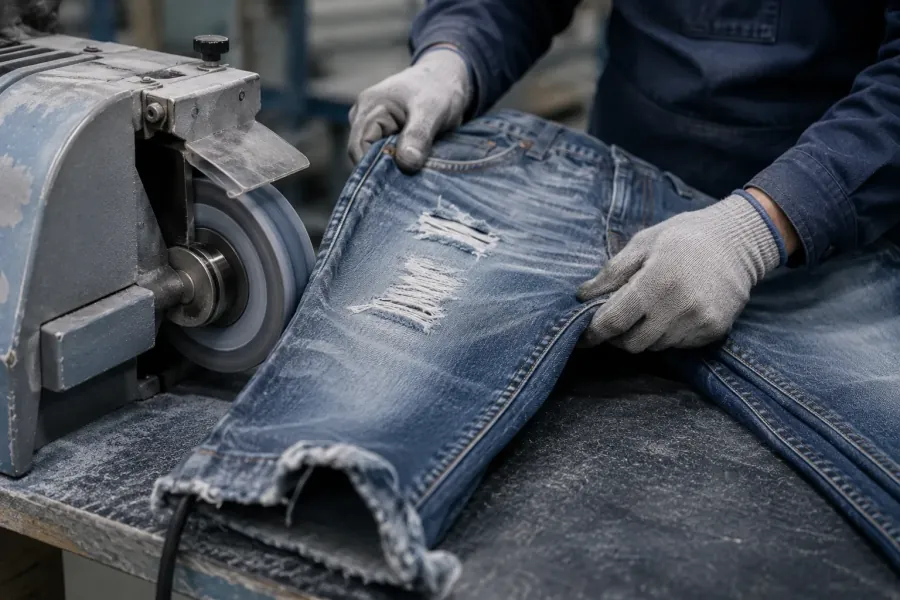
Grinding & distressing
Grinding and distressing are mechanical denim finishing techniques used to create worn, aged and rugged effects by selectively abrading or removing the surface of the fabric.
Best for: vintage, rugged and heavily worn denim styles.
How to choose the right denim wash
Choosing the right denim wash goes beyond colour. Fabric composition, weight, construction, desired hand feel, fit and overall design can all affect how a wash develops and how the finished garment looks and feels.
A custom denim wash is a development process, with the manufacturer refining the treatment to achieve the desired result:
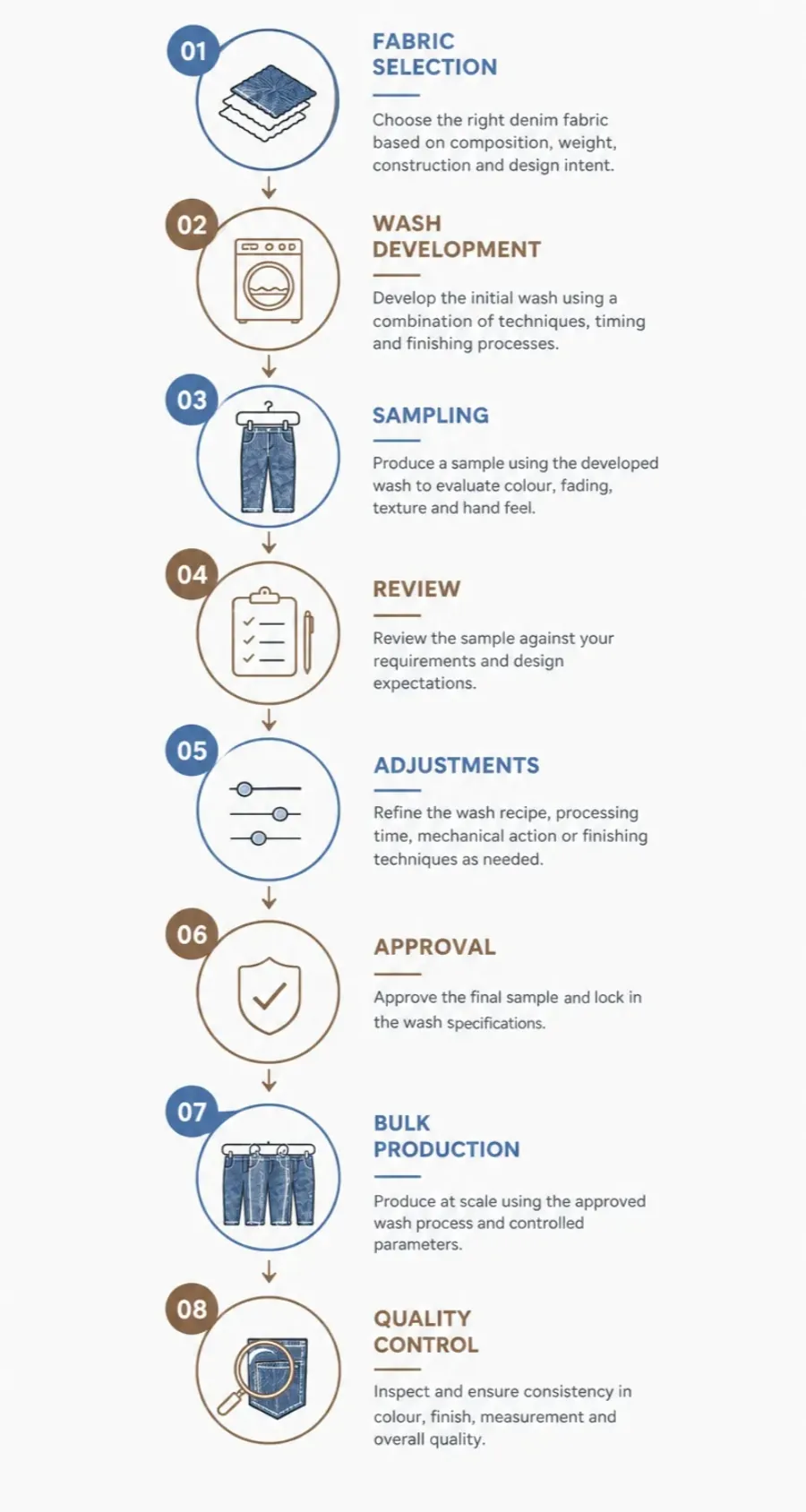
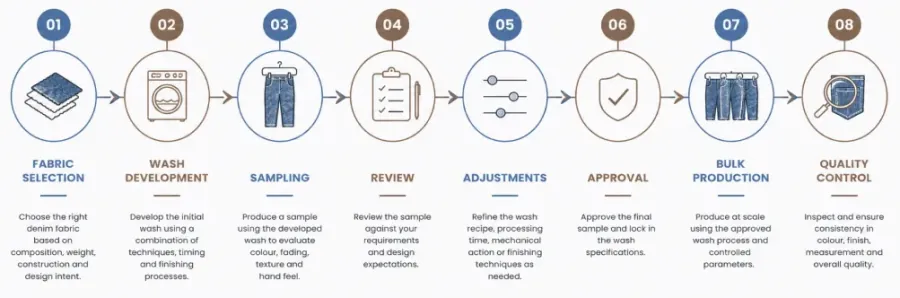
The manufacturer may adjust the wash recipe, processing time, mechanical action or finishing techniques to achieve the desired result. Once the wash is approved, the final specifications can be used as a reference for bulk production.
Things to consider when developing a custom denim wash
1. Colour
Determine whether you want a deep indigo, medium blue, light blue, grey, black or heavily faded appearance.
2. Hand feel
Consider whether the finished denim should feel rigid, soft, smooth or heavily worn.
3. Level of fading
Decide whether you want subtle overall fading or more defined effects such as whiskers, highlights and localised abrasion.
4. Texture
Different processes can create anything from a clean, smooth surface to a more pronounced worn and textured appearance.
5. Fabric performance
The washing process should be appropriate for the selected fabric. Treatments can affect colour, shrinkage, hand feel and overall garment performance, making fabric and wash development closely connected.
6. Repeatability
A custom wash needs to be reproducible. A professional manufacturer should be able to develop and approve a wash standard before moving into bulk production.