Guide
Denim sampling explained: from first sample to production
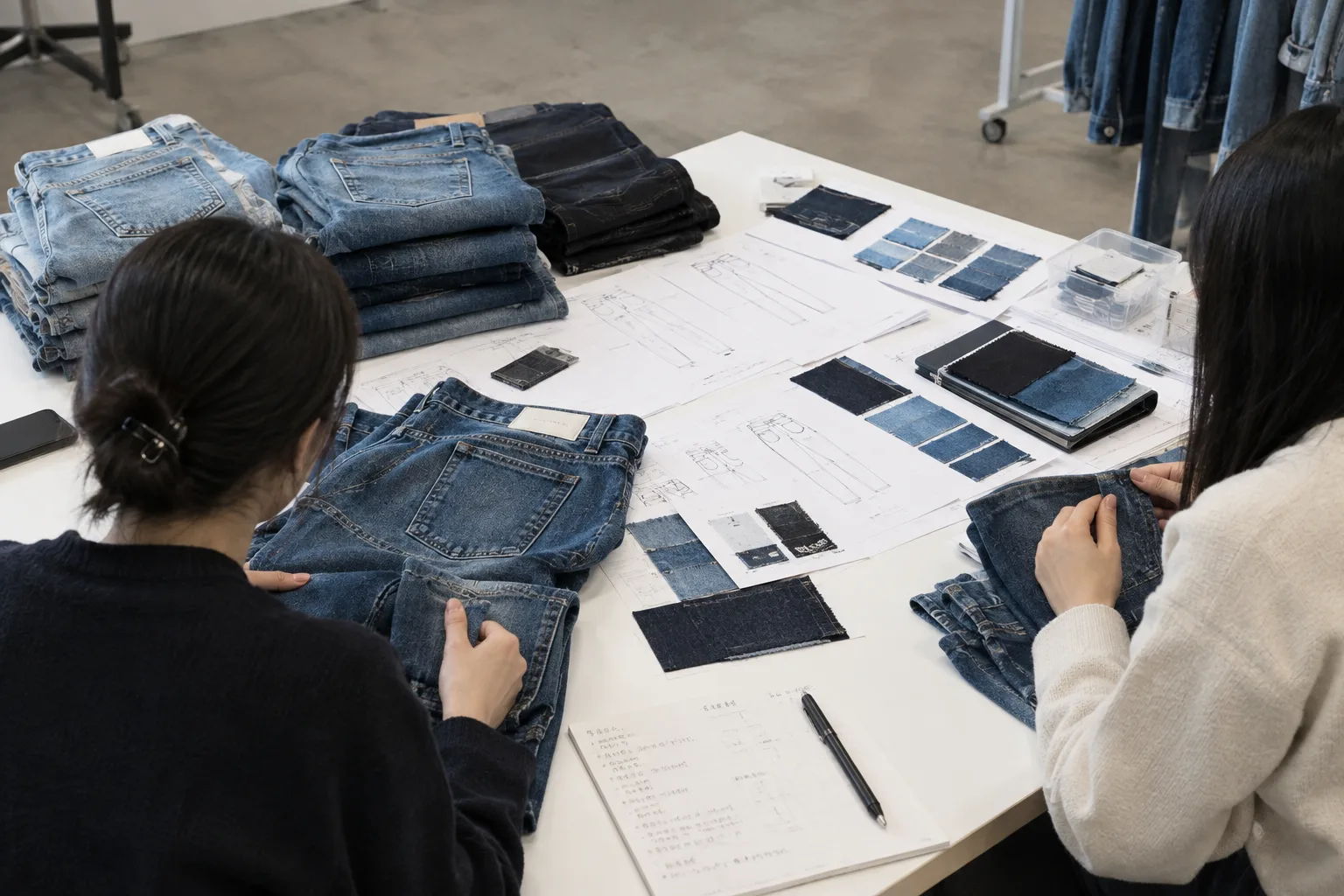
Denim sampling is the process of creating and refining physical garment samples before moving into bulk production. A sample allows a brand and manufacturer to evaluate the fit, fabric, construction, wash, finishing and overall appearance of a denim product before committing to production.
For custom denim, sampling is an essential part of development. It helps identify issues early, reduce production risks and ensure the final garment matches the intended design.
The denim sampling process
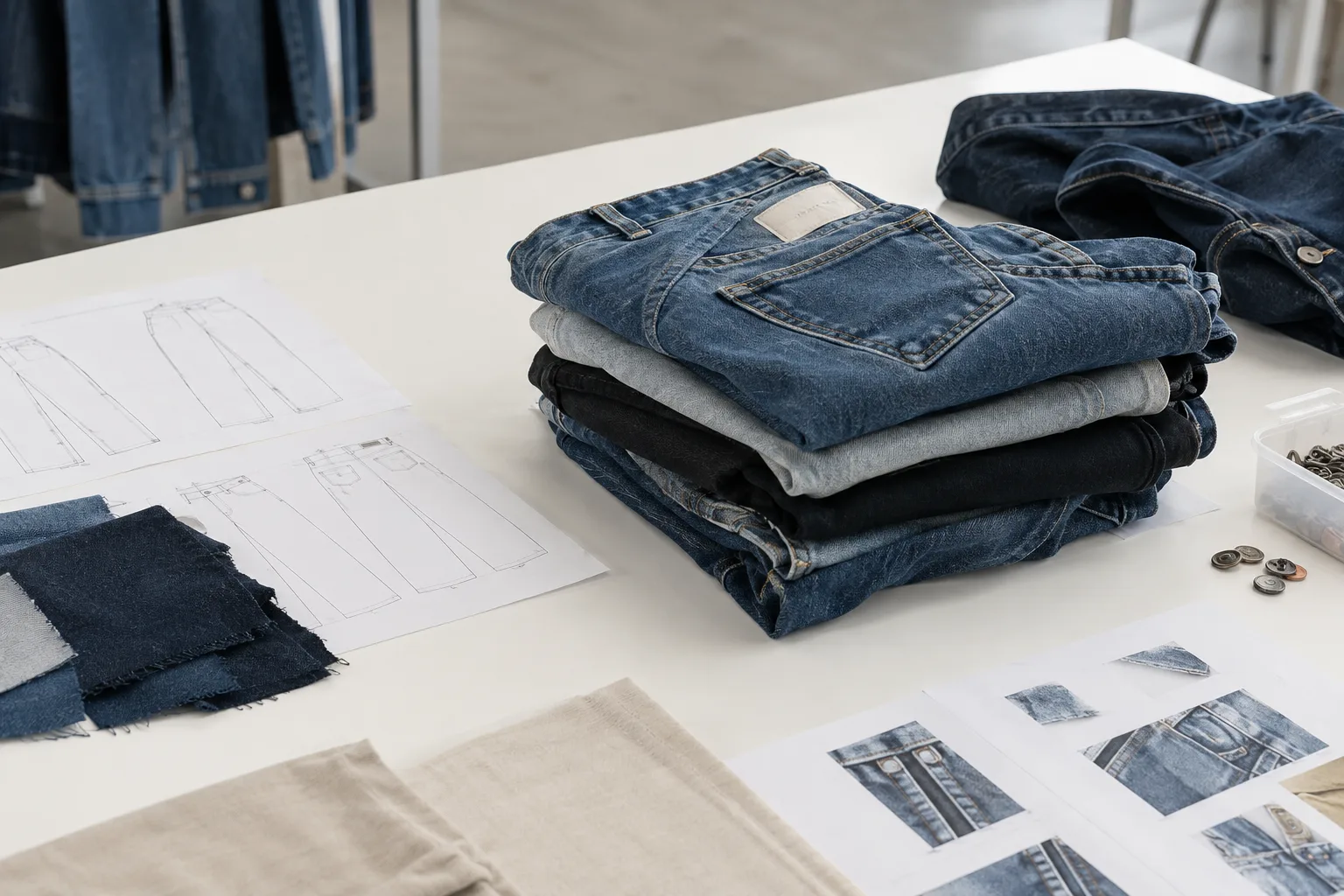
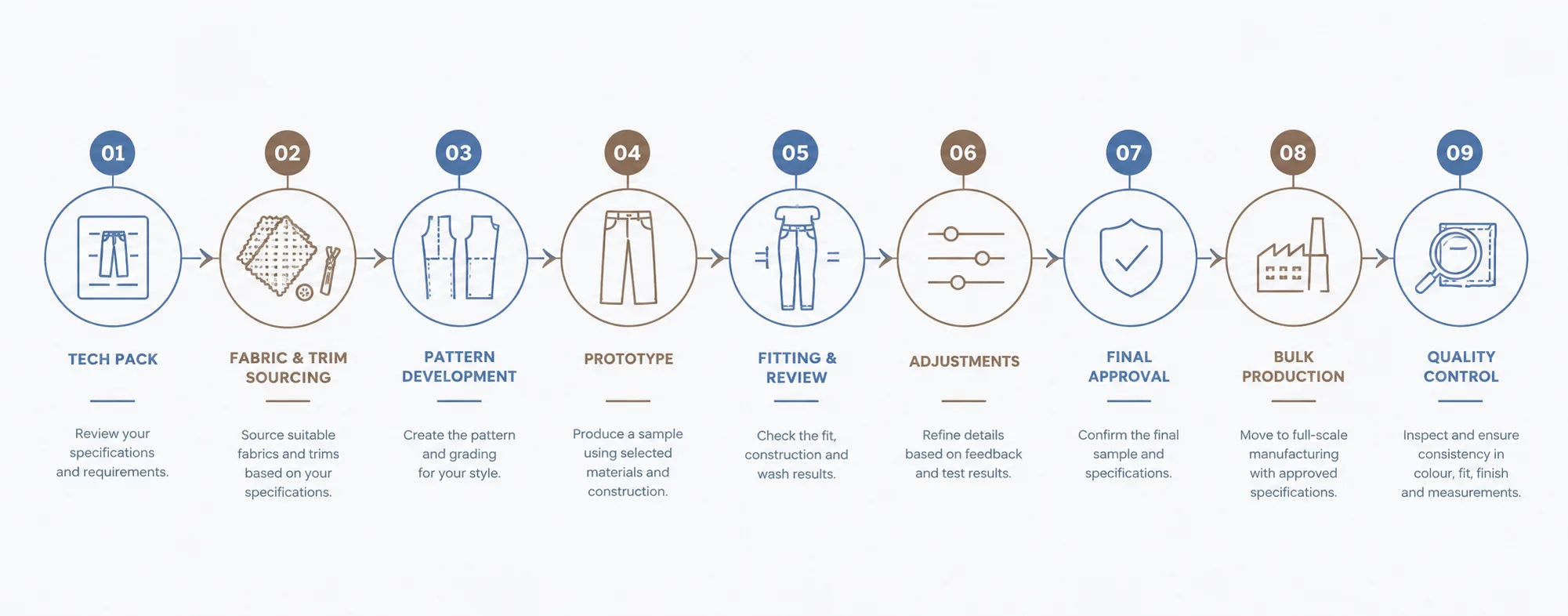
A typical denim sampling process follows a structured development workflow, from initial specifications (with a tech pack) and material sourcing to prototype development, fitting, adjustments and final approval.
The approved sample and specifications then serve as references for bulk production and quality control.
The number of sampling rounds may vary depending on the complexity of the design and the adjustments required before approval.
1. First sample: Turning the design into a garment
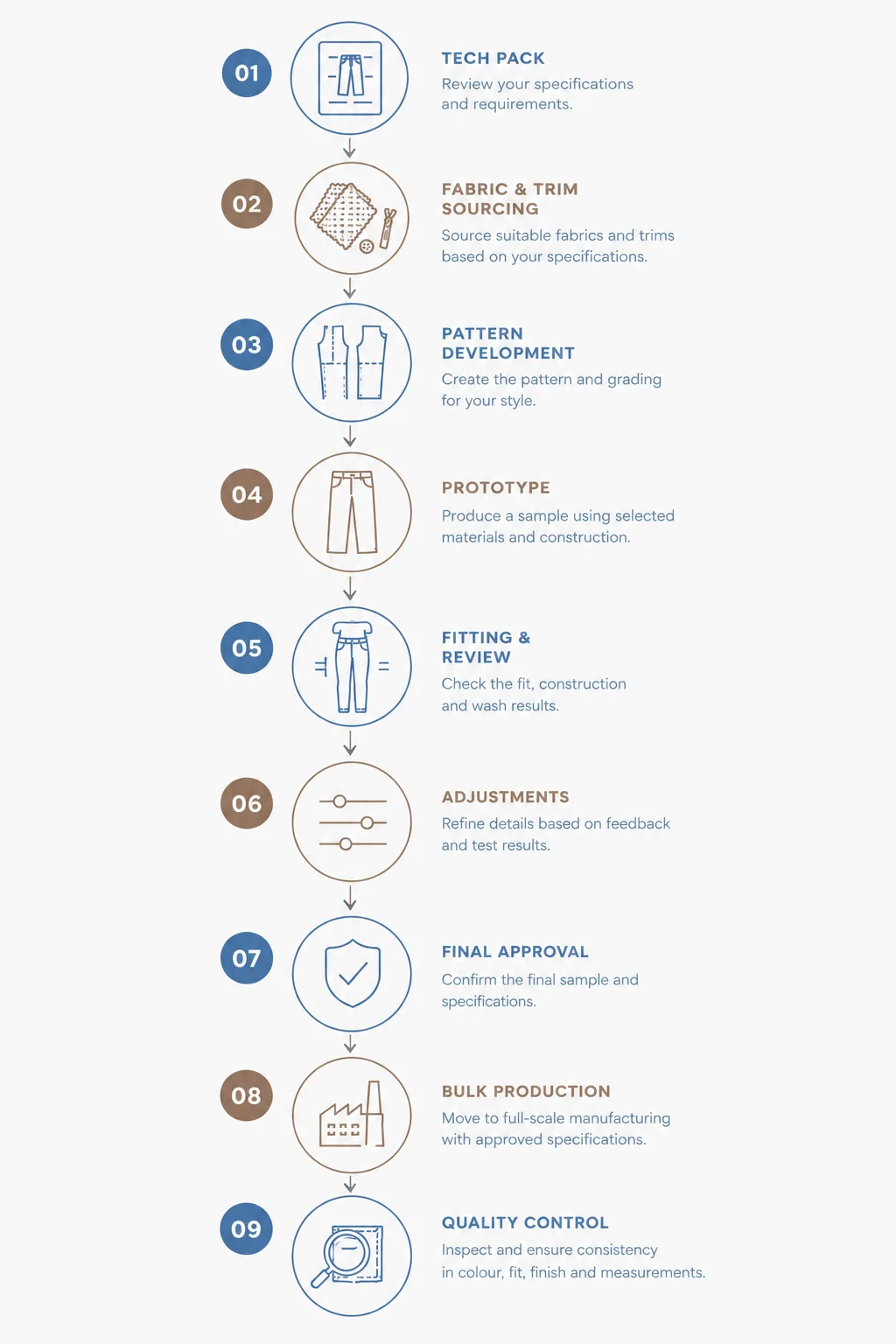
The first sample, sometimes called a development sample or prototype, is created from the initial specifications.
At this stage, the manufacturer translates your design into a physical garment, including:
- Pattern and measurements
- Fabric and trims
- Construction details
- Stitching
- Wash and finishing
The first sample is not necessarily the final product. Its purpose is to give the brand a physical reference to evaluate and refine.
2. Fit & construction review
Once the first sample is ready, the brand reviews the garment for fit, proportions and construction.
Key areas to check include:
- Waist and hip fit
- Rise and leg shape
- Inseam and length
- Pocket placement
- Seam construction
- Stitching
- Hardware and trims
For denim, fit should be assessed together with the fabric and wash, as different denim compositions and finishes can affect how the garment fits and feels.
3. Wash & finishing review
The wash can significantly change the appearance and hand feel of denim.
Brands should review:
- Overall colour
- Fading and contrast
- Whiskering
- Abrasion and distressing
- Hand feel
- Consistency across the garment
Custom washes often require several rounds of development to achieve the desired result.
4. Adjustments & sample refinement
After reviewing the sample, the brand provides feedback and the manufacturer makes the required adjustments.
These may include changes regarding the fit, the measurements, the fabric, the construction, the wash, the finishing or even the trims.
The updated sample is then reviewed again until the product meets the agreed specifications. Clear and consolidated feedback at each stage can help keep development efficient. Because denim washes can vary depending on the fabric and finishing process, the final wash is typically refined through sampling before bulk production.
5. Final sample approval
Once the fit, construction, fabric, wash and finishing have been approved, the final sample becomes the reference for production. The approved sample should be checked against the final specifications to ensure that key details are aligned before bulk production begins.
This approval stage is important because it establishes a clear reference for the manufacturing team and quality control process.
How many samples do you need?
There is no fixed number of samples required for every denim product. A simple style may require only a few development rounds, while more complex designs can require additional sampling to refine fit, construction, fabric or wash.
The goal is not simply to produce as many samples as possible, but to reach a production-ready specification before bulk manufacturing begins.
Common denim sampling mistakes
Avoiding these mistakes can help keep denim development efficient and ensure the final product matches your intended design:
- Approving the sample too early: Don't approve a sample until the fit, fabric, wash and construction have all been reviewed.
- Giving unclear feedback: Use specific measurements, comments and reference images where possible.
- Changing several specifications without tracking them: Keep your tech pack and sample comments updated so everyone is working from the latest version.
- Treating the wash as an afterthought: For denim, washing can significantly affect colour, appearance and hand feel. It should be developed alongside the garment rather than left until the end.
- Skipping the final approval stage: The approved sample should provide a clear reference before bulk production starts.
How Top Mondial supports denim sampling
At Top Mondial, product development covers the process from initial concept and fabric sourcing through sampling, washing, finishing and bulk production. Our teams work with brands to refine fit, fabric, construction and denim washes during development, helping turn a design or tech pack into a production-ready garment.
Whether you're developing your first denim collection or adding new styles to an existing range, sampling provides an opportunity to test and refine the product before moving into bulk production.