Guide
What is a denim tech pack?
A complete guide for brands
A denim tech pack is a technical document that contains the information a manufacturer needs to develop and produce your jeans or denim garment accurately. It translates your design concept into clear production specifications, covering everything from measurements and construction details to fabric, stitching, hardware, washes and finishing.
A well-prepared tech pack reduces misunderstandings during development and gives both the brand and manufacturer a clear reference throughout sampling and production.
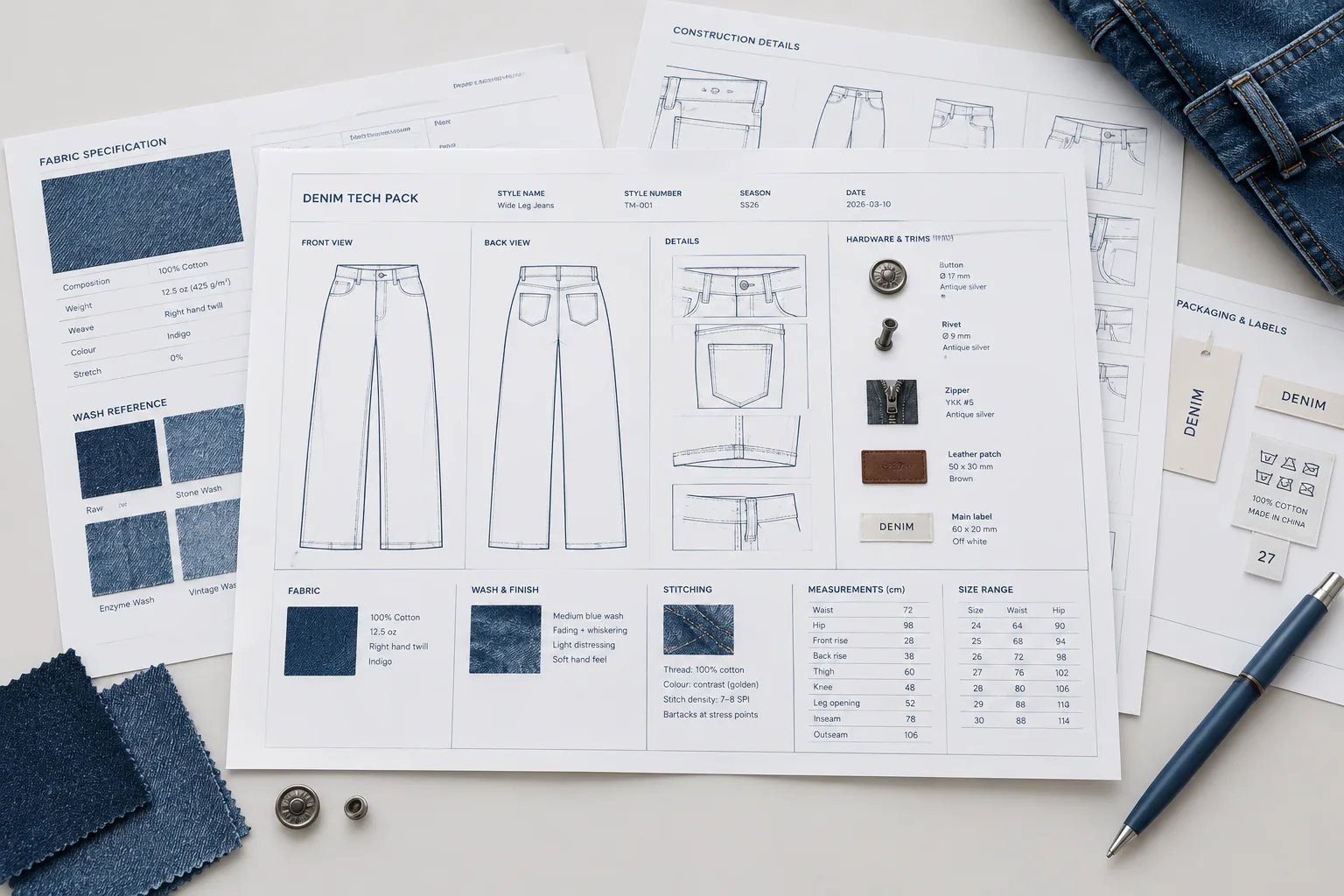
What should a denim tech pack include?
A complete denim tech pack should provide enough detail for a manufacturer to understand exactly how the garment should be made. The following should be included:
1. Technical flats & product details
Include front and back technical drawings showing the garment's overall construction and key design details.
These can include pocket shapes and placement, waistband and belt loops, seams and panels, closures and hardware, labels and branding, stitching details, hem construction. Clear technical drawings help the manufacturer understand the design beyond the initial fashion sketch.
2. Measurements & size specifications
Your tech pack should include a detailed measurement specification sheet, also known as a spec sheet.
Include key measurements such as waist, hip, front rise, back rise, thigh, knee, leg opening, inseam, outseam.
For multiple sizes, include a grading table showing how measurements change between sizes.
Tip: Be clear about measurement points and tolerances to avoid inconsistencies during sampling and bulk production.
3. Denim fabric specification
Fabric plays a major role in how denim looks, fits and feels. Specify details such as fabric composition, fabric weight, stretch percentage, weave and construction, denim colour, desired hand feel.
For example, a 100% cotton rigid denim will behave very differently from a stretch denim containing elastane. Providing the right fabric specifications helps your manufacturer select or source an appropriate material.
4. Wash & finishing details
For denim, the wash specification is one of the most important parts of the tech pack. Clearly communicate the desired base colour, wash effect, fading, whiskering, hand sanding, abrasion, distressing, and overall hand feel. Reference images, wash samples or approved garments can also help communicate the desired result.
Because denim washes can vary depending on the fabric and finishing process, the final wash is typically refined through sampling before bulk production.
5. Stitching & construction details
Specify how the garment should be constructed, including stitch type, stitch colour, stitch density, seam construction, thread specification, bartacks, hem details.
For denim, contrast stitching and seam construction can significantly influence the final appearance, so these details should be clearly documented.
6. Hardware & trims
Include specifications for all hardware and trims, such as buttons, rivets, zippers, patches, labels, hangtags, brand details. Where possible, specify the material, colour, finish, dimensions and placement of each component.
7. Packaging & labelling
Your tech pack can also include requirements for care labels, size labels, brand labels, hangtags, folding, packaging, carton requirements. Including these details early helps ensure the finished product is ready for delivery according to your brand's requirements.
Why is a tech pack important?
A good tech pack creates a clear reference between your brand and manufacturer. It helps to:
- Reduce production errors: Clear specifications minimise misunderstandings about your design.
- Improve sampling accuracy: The manufacturer has a detailed reference when creating your first prototype.
- Speed up development: Complete information reduces unnecessary back-and-forth during development.
- Maintain consistency: Approved specifications can be used as a reference during bulk production.
- Protect your design intent: Your measurements, construction, materials and finishing requirements are clearly documented.
How to create a denim tech pack
Start with your technical drawings and measurements, then define the fabric, construction, trims and wash requirements. Add reference images wherever they help communicate the intended result.
Before sending it to a manufacturer, check that your tech pack includes:
- Technical drawings
- Measurements and grading
- Fabric specifications
- Wash and finishing details
- Construction and stitching
- Hardware and trims
- Labels and branding
- Packaging requirements
If some specifications aren't final, an experienced denim manufacturer like Top Mondial can help refine them during development.
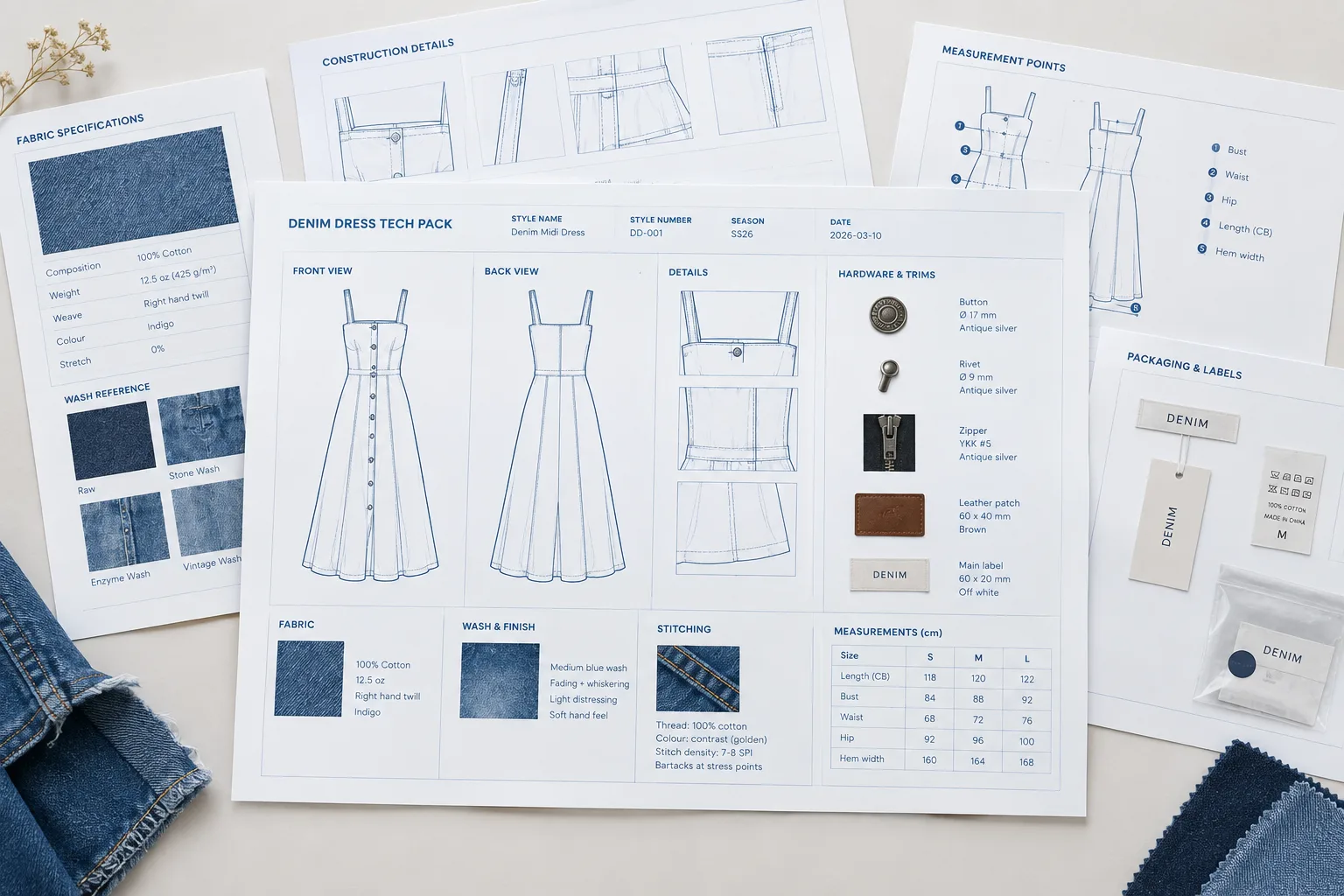
Common mistakes to avoid
Even a detailed tech pack can create problems if important information is missing or unclear:
- Missing wash references: Simply specifying "medium blue wash" may not be enough. Include reference images, wash samples or detailed descriptions to communicate the desired result.
- Incomplete measurements: Missing key measurements can lead to fit inconsistencies during sampling.
- Unclear fabric specifications: Fabric composition, weight and stretch can significantly affect the fit and final appearance of denim.
- No tolerances: Measurements should include acceptable tolerances so the manufacturer knows what variation is acceptable during production.
- Relying only on images: A fashion image communicates the overall aesthetic but does not provide enough technical information to manufacture the garment accurately.
How a denim manufacturer uses your tech pack
A tech pack is not simply a document that gets sent to the factory and forgotten. It becomes a working reference throughout the product development and manufacturing process:
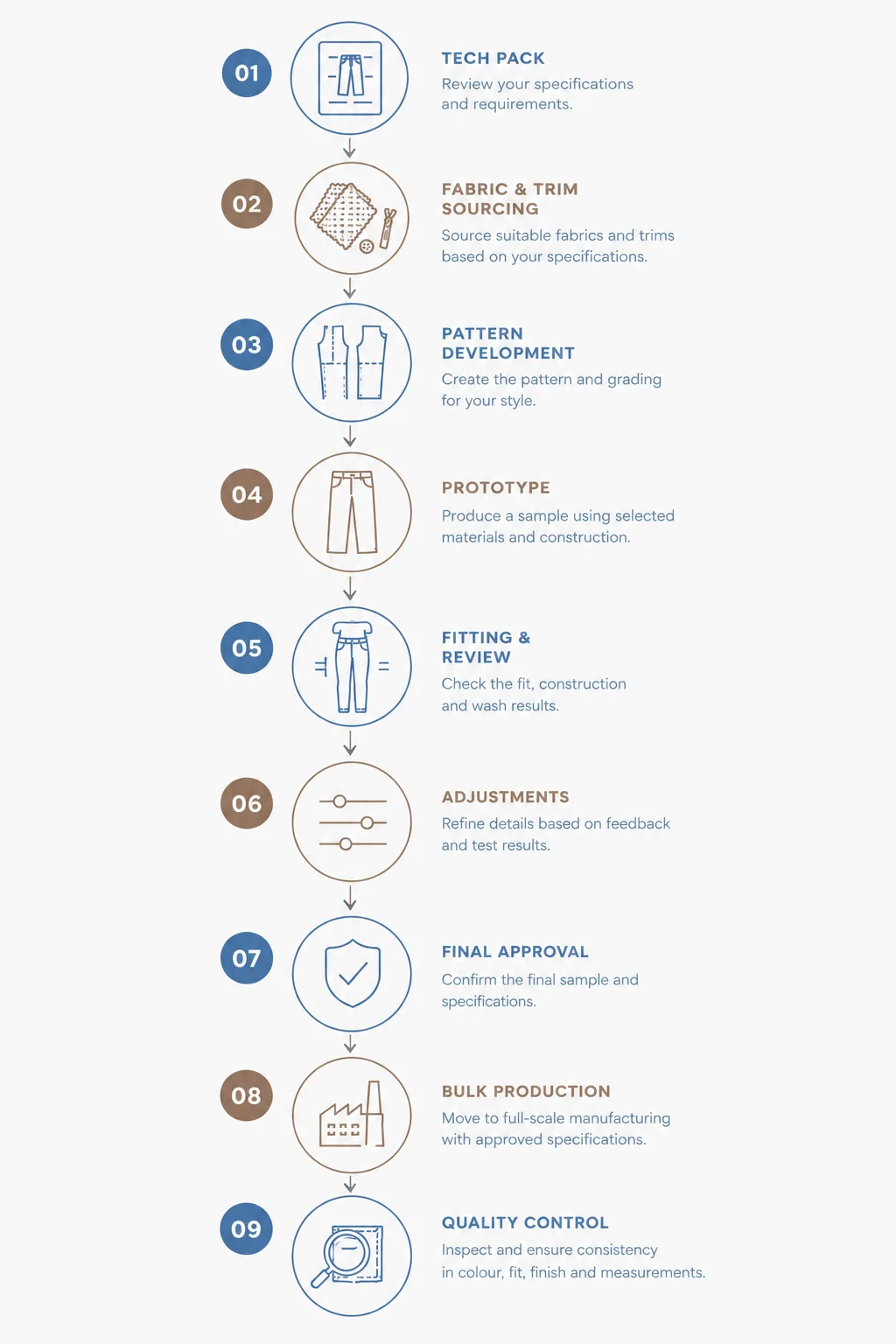
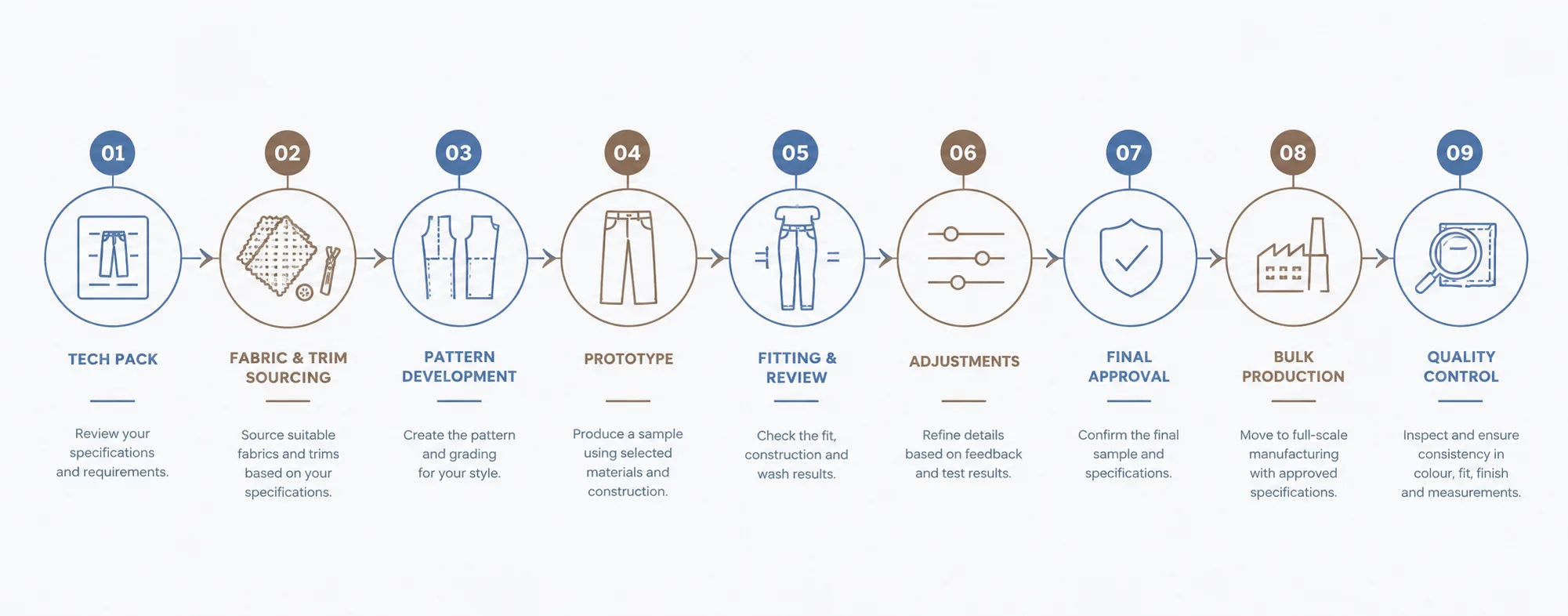
During development, your manufacturer may refine the fit, fabric, construction or wash based on sample results. Once approved, the final specifications become a reference for bulk production.