Guide
Payment terms explained: what to expect from a Chinese garment factory
Payment terms are an important part of working with a garment manufacturer. They determine when your brand pays for production and how payment risk is shared between the buyer and factory.
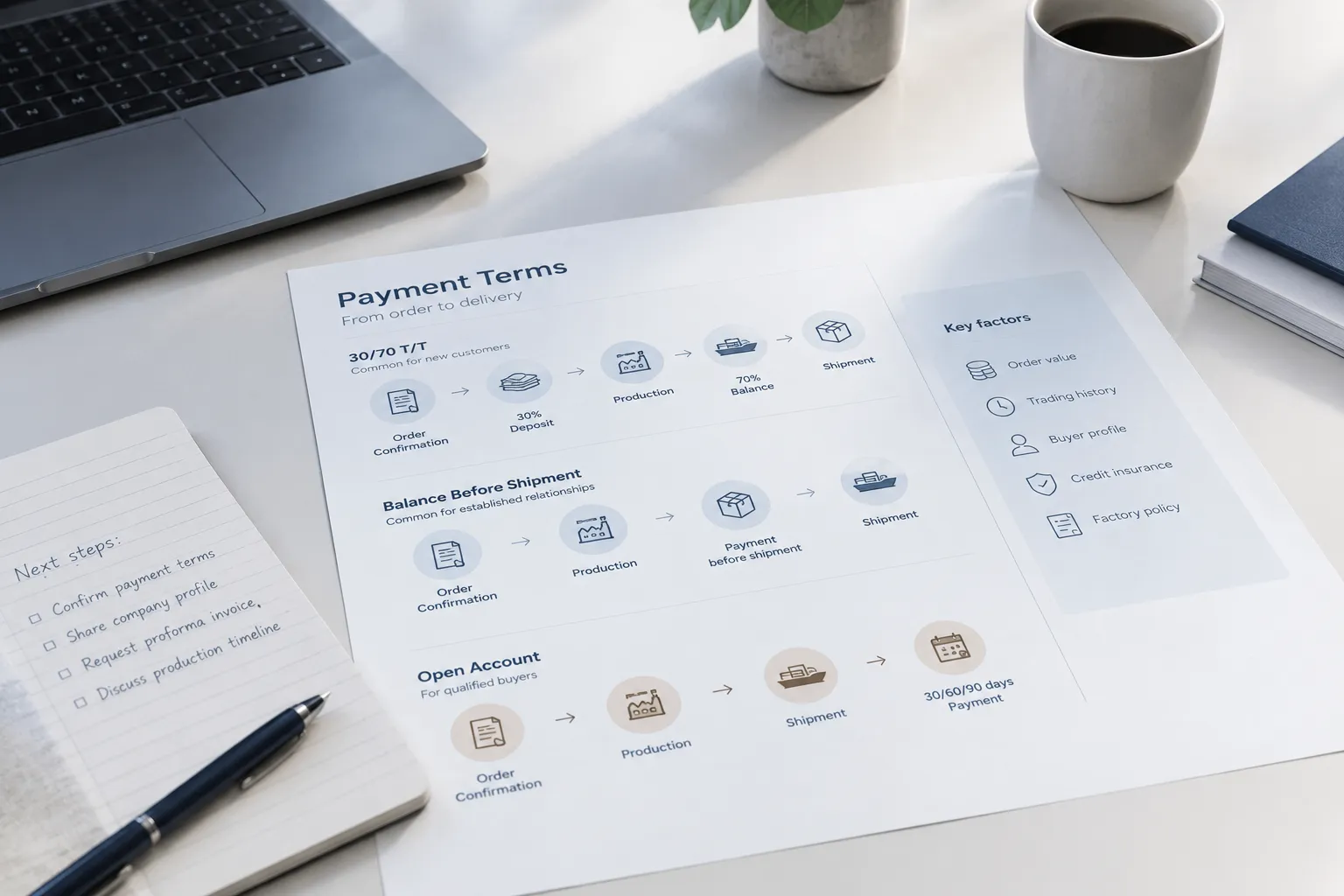
For international garment orders, several payment structures are common. The most appropriate arrangement can depend on factors such as the order value, buyer profile, trading history, relationship with the factory and available credit coverage.
For new customers, a 30/70 T/T structure is a common starting point.
What is 30/70 T/T?
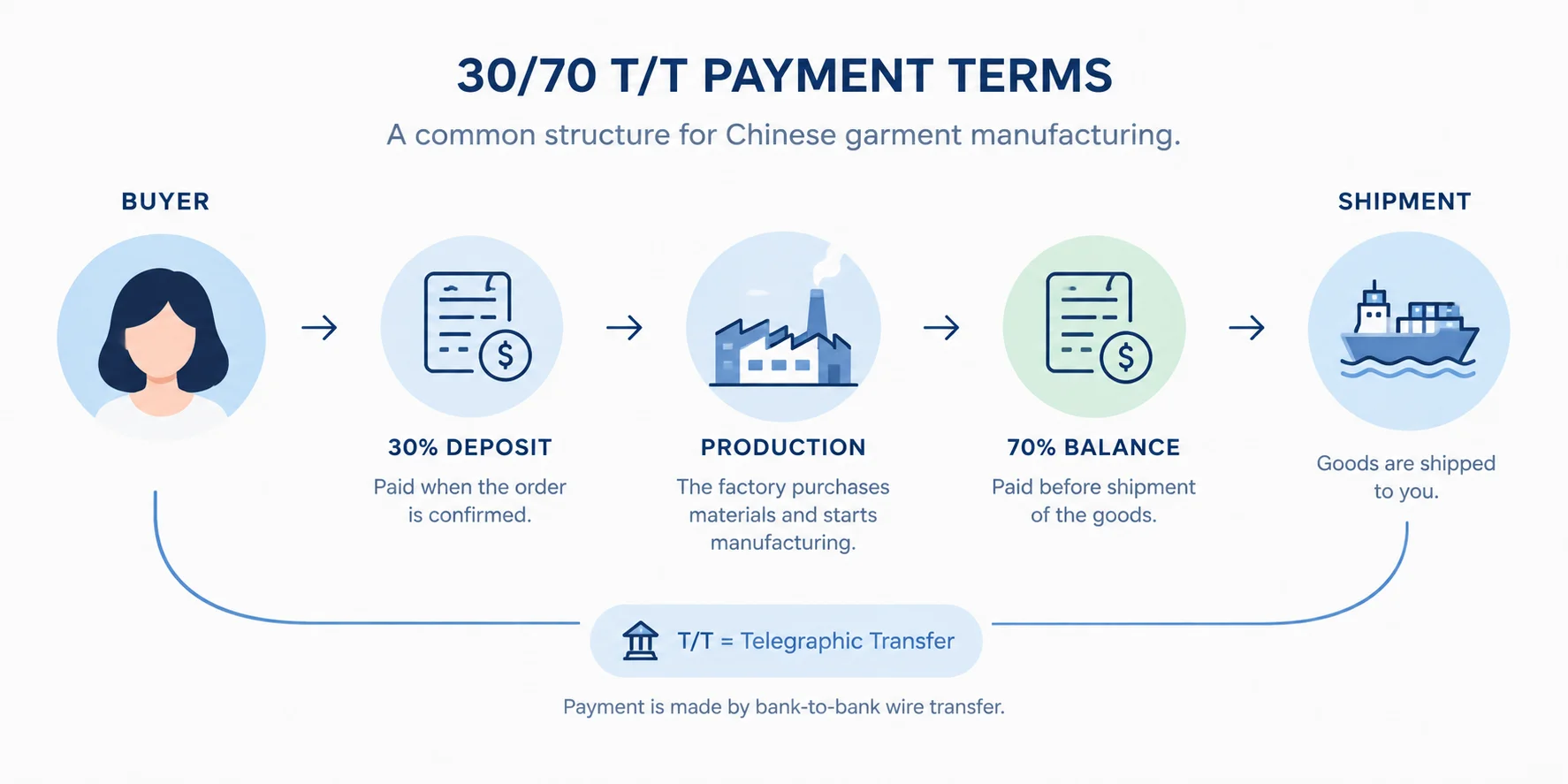
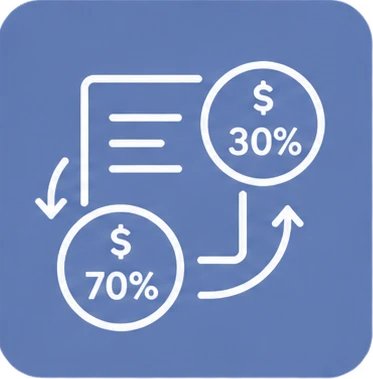
30/70 T/T means that the buyer pays 30% deposit when placing the order and 70% balance before the goods are shipped. "T/T" stands for Telegraphic Transfer, referring to a bank-to-bank wire transfer.
The initial deposit allows the factory to begin purchasing fabric, trims and other materials and start production.
The remaining balance is typically settled once production is completed and the order is ready for shipment.
Why do Chinese garment factories require a deposit?
Garment production involves significant costs before the finished goods are shipped.
A factory may need to purchase:
- Denim and other fabrics
- Buttons, zippers and hardware
- Labels and packaging
- Dyes and finishing materials
- Production capacity and labour
The deposit helps cover part of these upfront production costs. It also provides a level of commitment from both sides before manufacturing begins.
Why is the balance paid before shipment?
For many international orders, the factory requires the remaining balance to be paid before the goods leave the factory. This reduces the manufacturer's exposure to non-payment after production has been completed.
Once the goods have been produced specifically for a buyer, the factory may have limited options if the buyer does not pay the remaining amount. For new or less-established trading relationships, payment before shipment can therefore be a standard risk-management arrangement.
What is open-account payment?
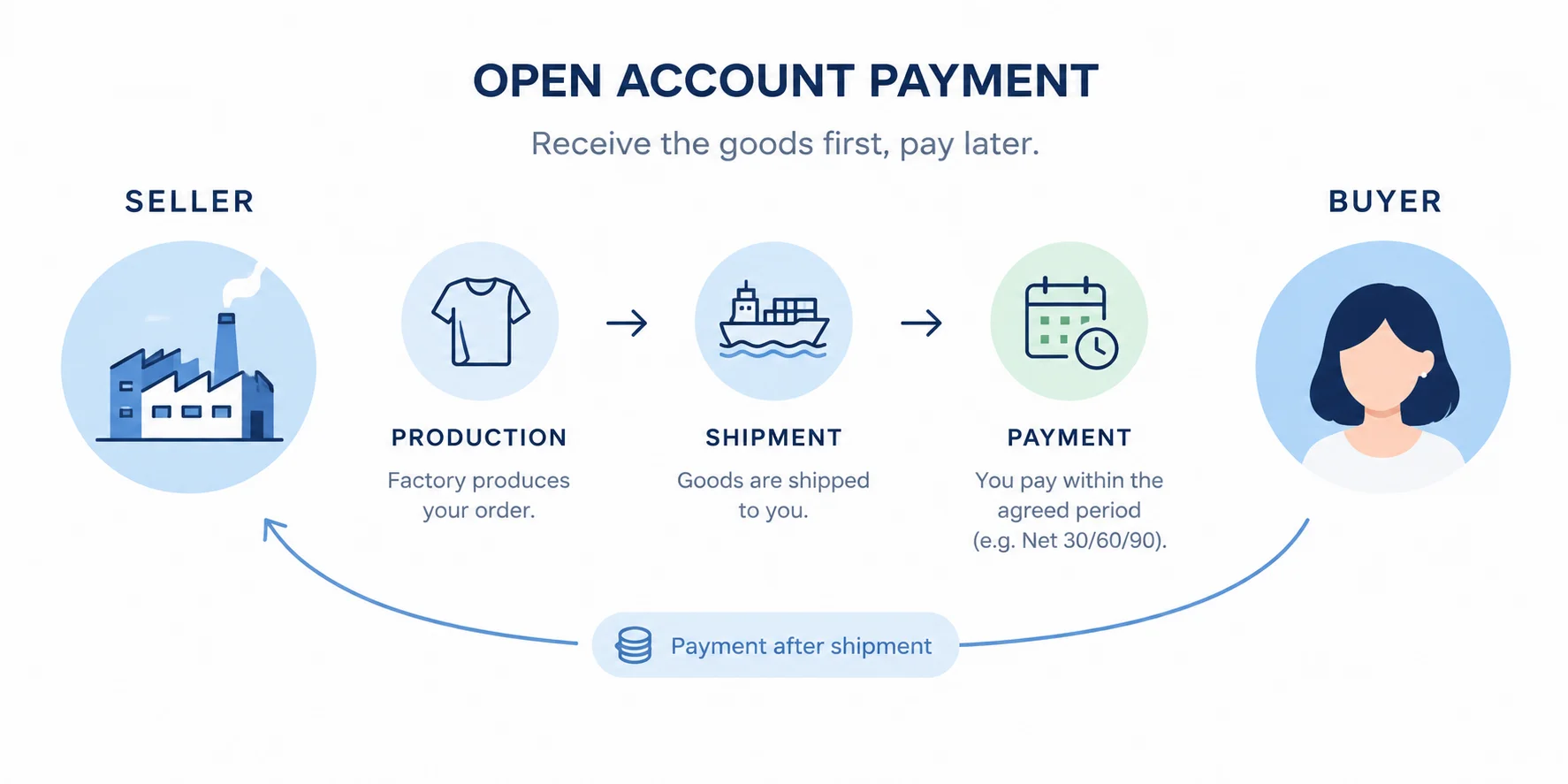
Open-account payment means the buyer receives the goods before making the payment. Instead of paying the balance before shipment, the buyer may have an agreed period such as: Shipment → 30/60/90 days → Payment
For example, with Net 60 terms, the buyer would normally pay 60 days after the agreed invoice date or shipment date, depending on the contract. This gives the buyer greater working-capital flexibility because payment is made after the goods have been shipped or received.
Why don't all factories offer open-account terms?
Open-account terms transfer more payment risk to the manufacturer.
With 30/70 T/T, the factory receives the balance before releasing the goods. With open-account terms, the factory ships the order first and waits for payment.
Because of this, a manufacturer may assess factors such as:
- Company history
- Financial strength
- Order value
- Previous trading history
- Payment record
- Credit information
- Available credit insurance or other risk protection
For some international orders, the manufacturer's ability to extend credit may also depend on whether the buyer can obtain sufficient export credit insurance coverage.
How credit insurance can affect payment terms
Export credit insurance, typically SINOSURE (China Export & Credit Insurance Corporation), helps protect Chinese exporters against certain commercial risks, including buyer insolvency and payment default. For a manufacturer, the availability and amount of credit coverage can therefore strongly influence how much payment risk it is comfortable taking.
Exporters can apply for a credit limit for each overseas buyer, based on factors such as the buyer’s credit information and proposed transaction. If a buyer cannot obtain sufficient credit coverage, the manufacturer may choose a payment structure with less exposure by asking for a bigger deposit. The exporter may also decline the order entirely if the buyer cannot obtain acceptable credit coverage or the transaction falls outside the factory’s risk limits.
This means that SINOSURE coverage can sometimes affect not only the payment terms a factory offers, but whether it is willing to work with a buyer at all. For newer or smaller brands, obtaining sufficient credit coverage may be more difficult if there is limited trading history or credit information available. However, this does not mean that SINOSURE coverage is universally required. Each Chinese manufacturer sets its own credit and risk policies.
What payment terms should a new brand expect?
For a new relationship with a Chinese garment factory, it is reasonable to expect the factory to start with a lower-risk payment structure like 30/70 T/T. As the commercial relationship develops, payment terms may be reviewed based on factors such as order history, payment performance, company information and credit assessment. Payment terms are therefore not necessarily fixed forever. They can form part of the commercial relationship between a brand and its manufacturing partner.
30/70 T/T
Typical structure is: 30% deposit → Production → 70% balance → Shipment
for the buyer
- Common structure for international manufacturing
- Straightforward payment process
- Factory can begin production after receiving the deposit


for the factory
- Part of the production costs are covered upfront
- Lower exposure to non-payment
- Balance is received before shipment

Open Account
Typical structure is: Production → Shipment → 30/60/90-day payment period
for the buyer
- Improved cashflow
- Payment can be made after shipment or receipt
- Less working capital tied up before delivery
for the factory
- Greater exposure to buyer non-payment
- Need greater confidence in the buyer’s creditworthiness
- May require credit insurance or other risk protection
Can a small brand get open-account payment terms?
Being a small or newly established brand does not automatically determine whether open-account terms are available. However, a manufacturer may have less information with which to assess the buyer's credit risk when there is:
- Limited trading history
- Limited financial information
- No previous orders
- No established payment record
- Insufficient credit coverage
Providing clear company information and building a consistent payment history can help a manufacturer better understand the buyer and assess the commercial relationship. Ultimately, payment terms are agreed between the buyer and manufacturer and may be subject to the manufacturer's credit-risk requirements.
How can you prepare for your first garment order?
Before approaching a manufacturer, having your company information ready can make the commercial process easier. Useful information can include:
- Registered company name
- Company registration number
- Registered address
- Website and brand information
- Expected order volume
- Product requirements
- Target delivery date
- Previous manufacturing or trading history, where applicable
- Relevant financial or credit information
For larger orders, manufacturers may request additional information as part of their customer and credit assessment.
Payment terms at Top Mondial
At Top Mondial, payment terms are discussed as part of the commercial and production process.
For new customers, payment structures may be based on the order, buyer profile and applicable credit requirements. For FOB orders, Top Mondial typically works with a 30% deposit and 70% balance payment before shipment. The initial deposit allows production to begin, while the remaining balance is paid once production is completed and the order is ready to ship.
Our team can discuss the appropriate payment arrangement for your project before production begins, so that costs, deposit requirements and shipment conditions are clear from the start.
For brands looking to establish a long-term manufacturing relationship, consistent orders and reliable payment performance can also provide a stronger basis for reviewing commercial terms over time.