Guide
EU Digital Product Passport for denim:
what to ask your factory to record now
The EU is bringing in a Digital Product Passport (DPP) for textiles. It applies to jeans sold in the EU wherever they are made, so it reaches UK and US brands and their factories in Asia.
The textile rules are not final. This page was written on 22 October 2026. It separates what is confirmed from what is expected and links to the European Commission page.
It includes a checklist of records to ask your denim factory to keep now, so the data exists when the rules arrive.
What is the EU Digital Product Passport?
A Digital Product Passport (DPP) is a digital record of a product, linked from the product itself. The data describes what the product is made of, where and how it was made, and how to care for, repair or dispose of it.
The passport comes from the EU's Ecodesign for Sustainable Products Regulation (ESPR). The regulation sets the framework. Rules for each product group, textiles included, come later in separate acts.
It applies to products placed on the EU market, whether they are made inside or outside the EU. A pair of jeans sewn in China or Cambodia and sold in the EU is in scope once the textile rules apply.
Responsibility sits with the business that places the product on the EU market. In practice, that business relies on its suppliers for the data. That is why brands are asking factories for records now.
The passport is not a certificate. It does not replace GRS, RCS or OCS. Those certificates may be some of the evidence behind the data. For what each one proves, read denim factory certifications explained.
Where the textile rules stand on 22 October 2026
The framework regulation exists, but the textile-specific act is not final. Dates quoted in the trade press differ, so this page states no start date. For the current position, check the European Commission's textile DPP page.

What is settled
The framework is in place.
the framework
- An EU regulation, ESPR, sets up the passport
- Textiles are a priority product group
- It applies to products sold in the EU, wherever they are made


what it means for you
- Data will have to come from the supply chain
- A brand cannot assemble it alone

What is still open
The textile details are not final.
not yet final
- The exact data fields
- The start date for textiles
- The data carrier format
- Who must hold the data
how to plan
- Prepare records that are useful whatever the final list says
- Re-check the Commission page before relying on any date
What data a denim passport is likely to need
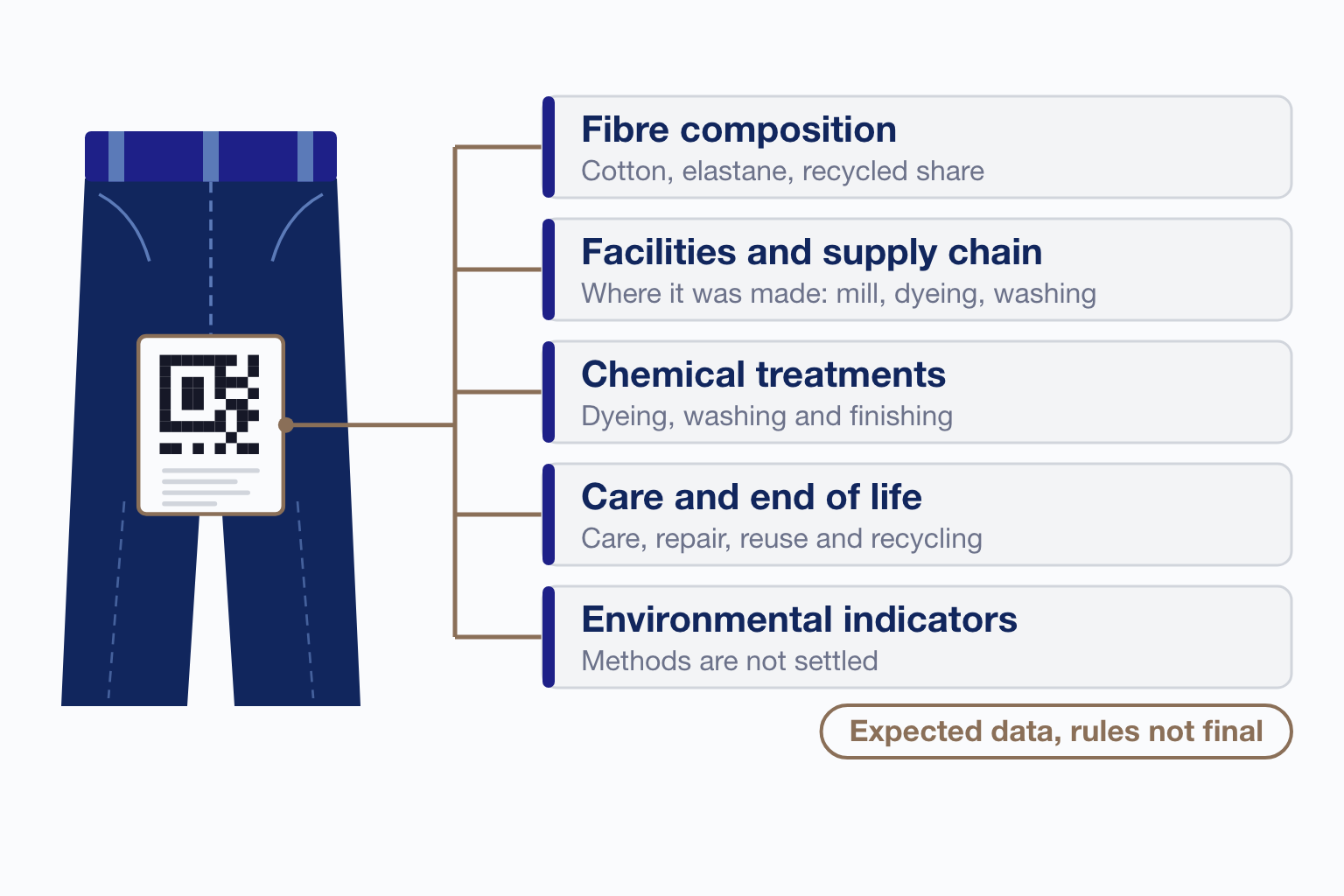
Expected, not confirmed. These are the DPP data requirements for textiles under discussion. The final act may add, drop or reword them.
Fibre composition
Percentages by fibre, as on the care label. For denim this covers cotton, elastane, polyester and lyocell, plus any recycled or organic share.
For fibre choices and what each one changes, see sustainable denim manufacturing.
Facilities and supply chain
Where the garment was made, and likely the key upstream stages: the fabric mill, dyeing and washing. Expect to give the name and location of each facility.
Chemical treatments and substances
What was used in dyeing, washing and finishing, and evidence that it meets the restrictions that apply. Denim is wash-heavy, so this lands on the wash house.
Care, repair and end of life
Care instructions, plus information on repair, reuse or recycling. This can include how the garment comes apart. Rivets, buttons and blended fibres all affect that.
Environmental indicators
Possibly figures such as recycled content or durability. The methods are not settled, so do not guess at specific metrics.
How it is carried
A product passport carrier on the item, such as a QR code on the clothing label, linking to the record online. The format is not final.
What to ask your denim factory to keep now
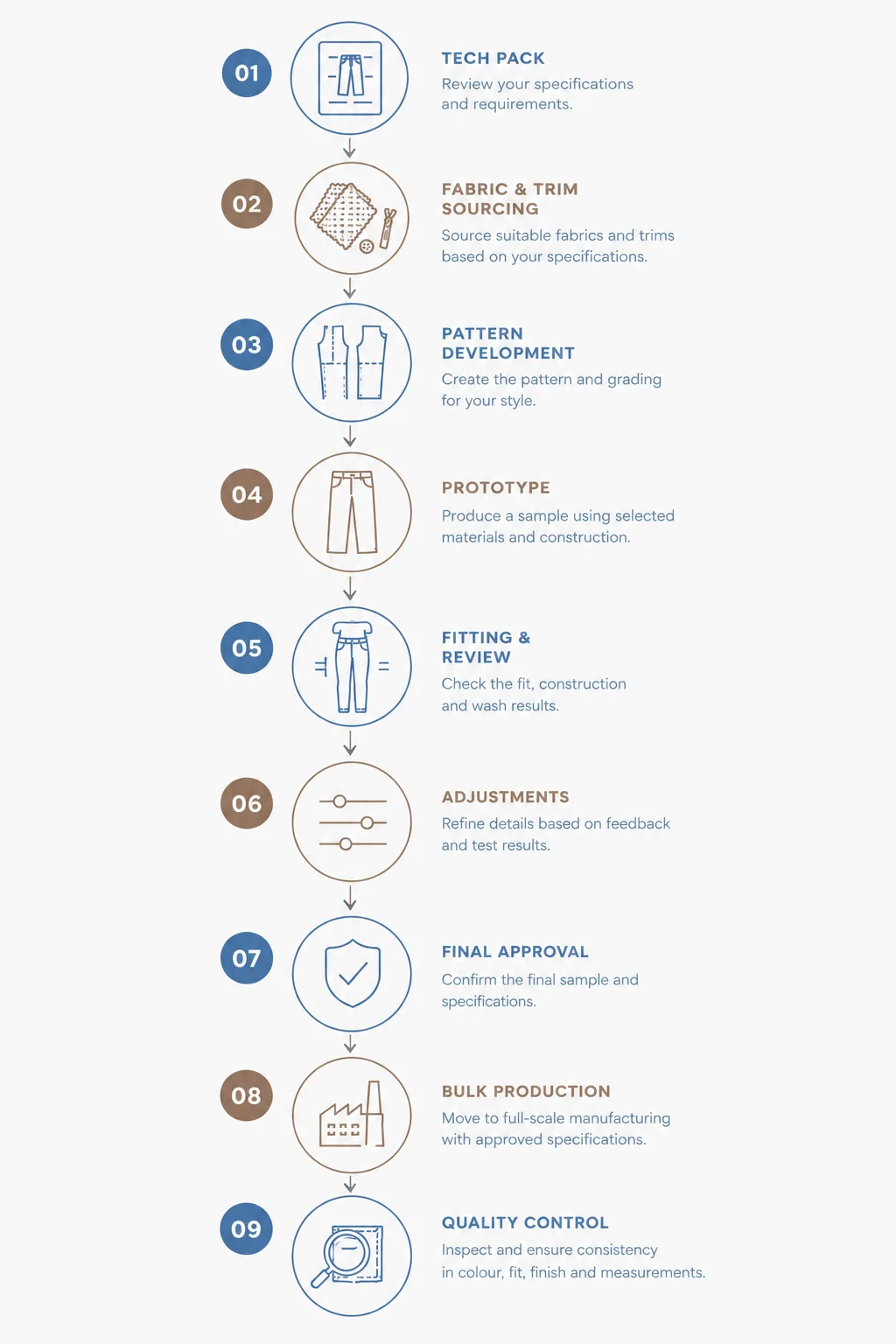
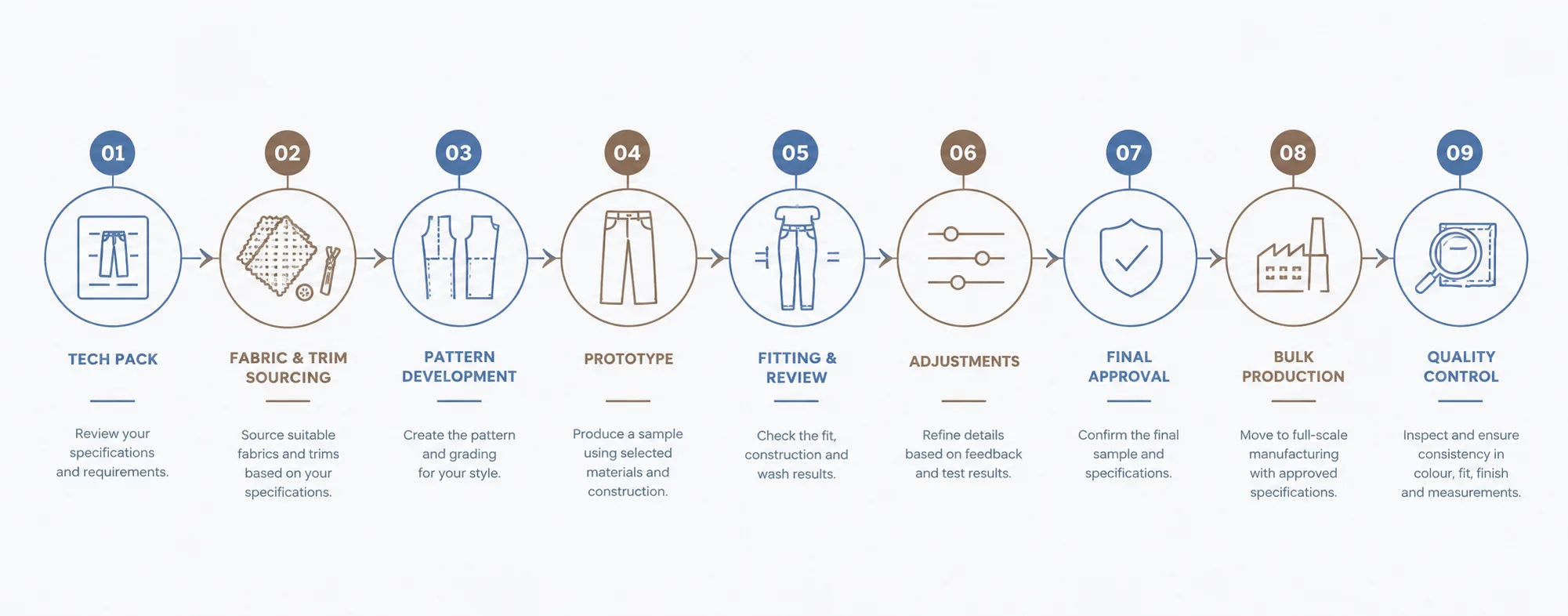
Raise this at step 1 of the process below, tech-pack review. Records are cheapest to keep when the order is placed. Rebuilding them after shipment is much harder.
Copy this list into your tech pack or enquiry:
- Fabric origin: mill name, country, fabric article or reference, and fibre composition for each fabric
- Trim origin: supplier and country for buttons, rivets, zips, labels and pocketing
- Facility details: name and address of the sewing site, the wash house and any subcontracted process
- Certificates, where you make a claim: the GRS or RCS (or OCS) scope certificate, plus a transaction certificate for each shipment
- Chemical compliance records: test reports against your restricted substances list (RSL), or your retailer's, for fabric and finished garments
- Care and composition: the care instructions and fibre content exactly as they appear on the care label
- Order link: a link between every record and the purchase order or production lot, so the data matches the jeans that ship
Add a “traceability records required: yes or no, and which” line to your denim tech pack. To check a certificate, see denim factory certifications explained.
Where denim supply chains are hardest to trace
A pair of jeans passes through more hands than most garments, so supply-chain traceability is harder. Each stage keeps its own records.
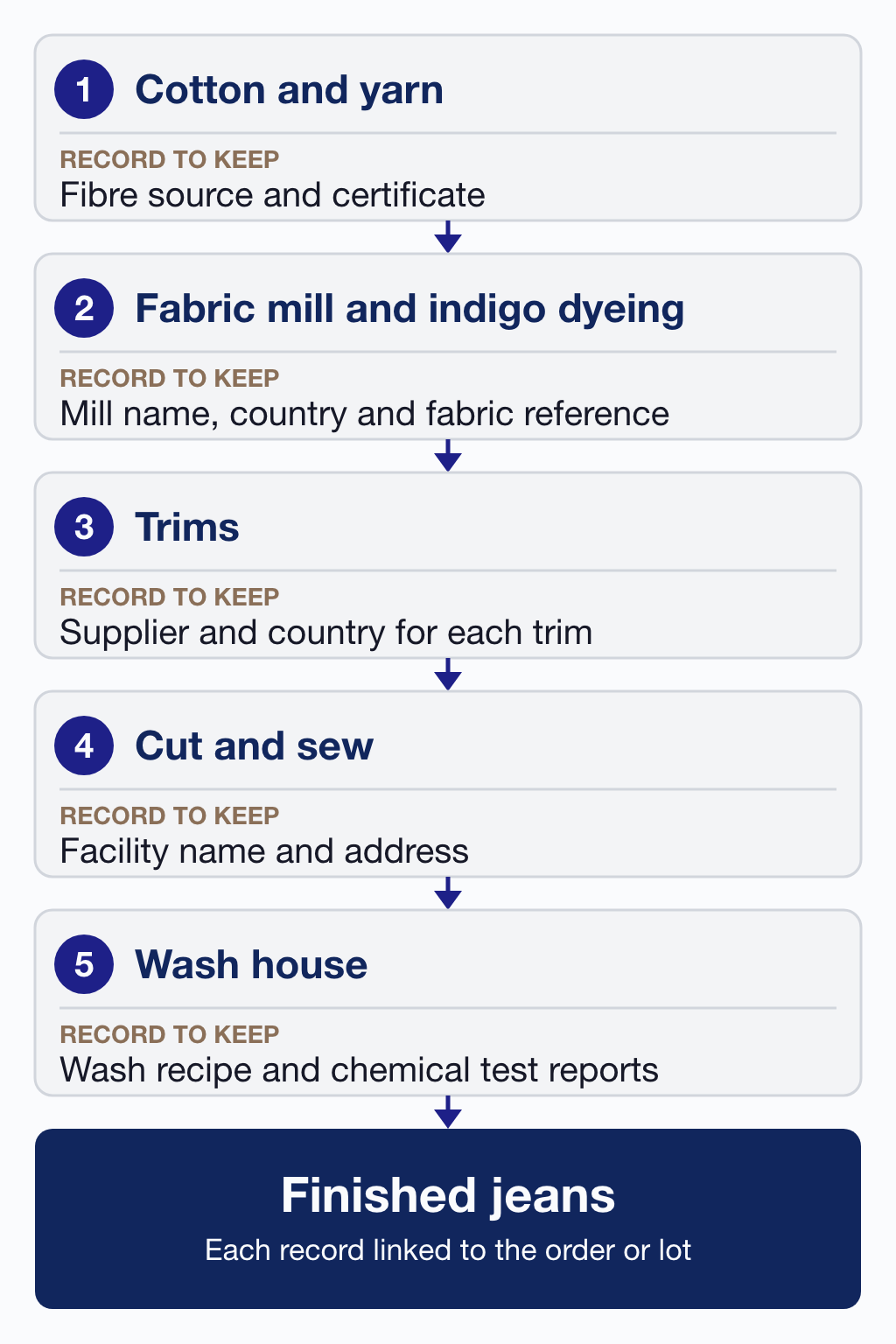
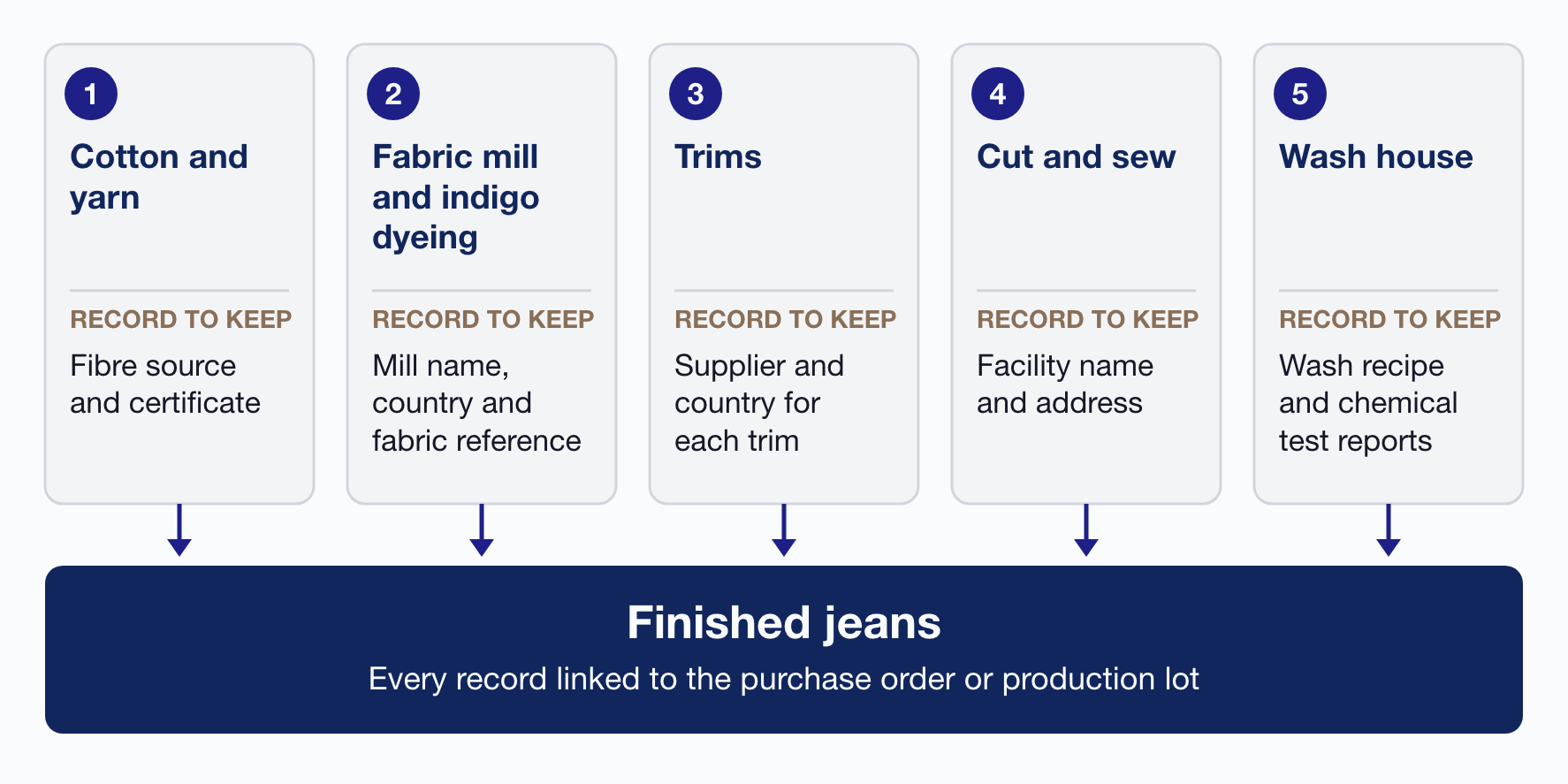
- Cotton and yarn: often several steps upstream of the mill. A claim here needs a certified chain.
- Fabric mill and indigo dyeing: the fabric you pick decides the mill, so the mill's records matter.
- Trims: many small suppliers. Easy to miss.
- Cut and sew: the garment factory. Usually the easiest stage to document.
- Wash house: where the chemical and recipe records sit. Ask whether washing is in-house or subcontracted.
Fewer separate companies means fewer hand-offs to document.
What this means for UK and US brands selling into the EU
The UK is not in the EU. A UK brand selling clothing into the EU, to customers or to EU retailers, is placing products on the EU market. EU product rules apply to those products. The same goes for US brands.
If you sell only in the UK or the US, the EU passport does not apply to those sales. This page does not cover any UK or US equivalent and does not say whether one exists.
EU retailers and marketplaces may ask suppliers for data before any legal date. Treat their supplier manual as the practical requirement.
Who places the product on the market, and who the importer is, ties into your shipping terms. See FOB vs CIF vs DDP and working with an overseas denim manufacturer from the UK. Confirm the position with a customs or compliance adviser. This page is not legal advice.
Digital Product Passport for jeans: common questions
Do my jeans need a passport QR code today?
The textile rules are not final, so there is no confirmed format or start date to design to as of 22 October 2026. Check the Commission page linked above for the current position. Do not commit to a label design until the format is confirmed.
Does it apply if my jeans are made in Asia?
Yes, once the textile rules apply. Scope follows where the product is sold, not where it is made.
Does a GRS or RCS certificate make my jeans DPP-ready?
No. A certificate can support part of the data, such as recycled content. The passport is expected to cover more than any single certificate does. For what certificates can and cannot support, see sustainable denim manufacturing.
Who should hold the data, us or the factory?
That is not finalised. Ask the factory to keep records per order and to share them with you on request.
Traceability records at Top Mondial
We make denim in our own factories: the Changxing plant in Zhejiang, China, and the Kandal and Takeo plants in Cambodia.
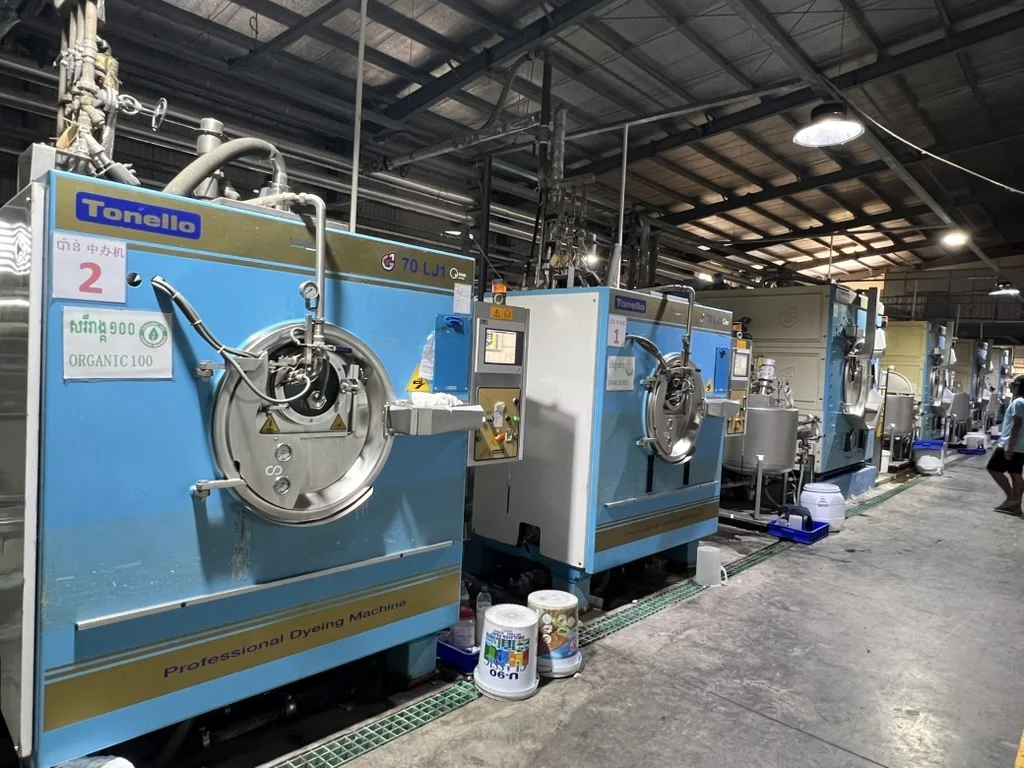
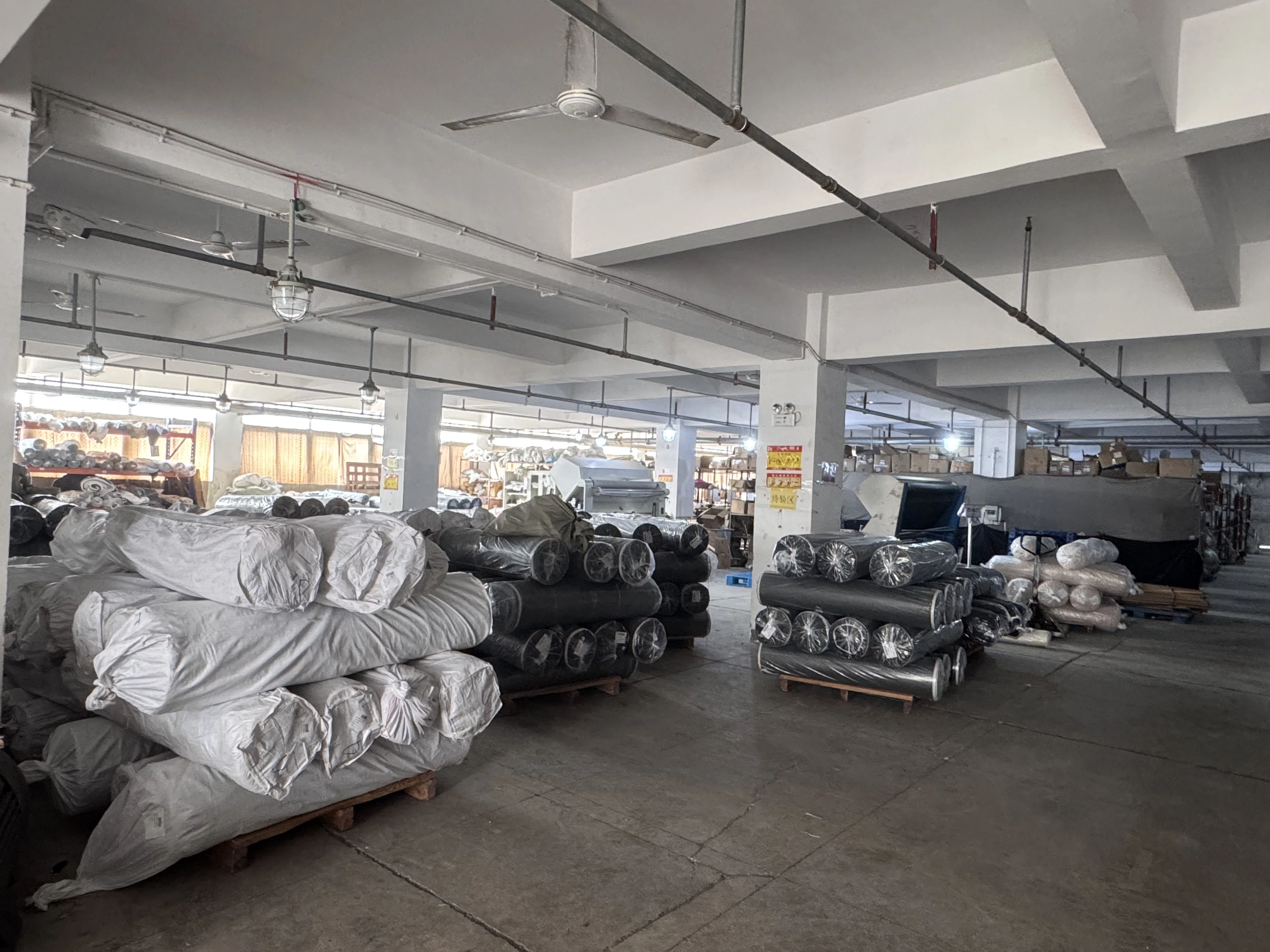
Production is managed in-house, from design, cutting, and sewing to embroidery, hand finishing, washing, and final logistics. We have our own dyeing and washing department. Our fabric sourcing department has long-term partnerships with more than 20 fabric mills.
Top Mondial holds these certifications:
- ISO 9001:2015
- ISO 14001:2015
- amfori BSCI
- Global Recycled Standard
- Recycled Claim Standard 100
- Recycled Claim Standard Blended
- Organic Content Standard 100
- Organic Content Standard Blended
- ICS
You can see the badges on the factories page. Ask us which records we can provide for your order.
Send your product, quantity, the markets you sell into and the records your buyer asks for.