Guide
Where denim is made:
denim manufacturing countries compared
Most lists of denim manufacturers rank factories. This page compares countries, because the country decides your fabric access, the direction of your MOQ, your transit time and how duty is treated.
It covers seven countries: China, Cambodia, Türkiye, Pakistan, Bangladesh, Vietnam and Mexico. Each description is a general pattern, not a rule. Any single factory can differ from its country's pattern.
The page gives no tariff rates and names no competitor factories. Top Mondial makes denim in China and Cambodia only, and the last section says so.
Why the country matters before the factory
Where are jeans made? The country sets the defaults: how close the fabric mills and laundries are, the usual MOQ, the transit time to the UK or US, and which trade rules apply to the goods.
The factory sets everything else: quality systems, communication and sampling. The checklist is in how to choose a denim manufacturer.
A brand that skips the country question can end up with a good factory in the wrong place: fabric that has to be shipped in, or a transit time that misses a drop date.
Whether you need a factory at all, or a wholesaler, is a separate decision. See jeans manufacturer vs wholesaler.
If you source from the UK and are still deciding whether to go overseas, read clothing manufacturers UK vs overseas denim.
Where denim is made: seven countries profiled
Each profile covers the same four points: strengths, typical buyer, MOQ direction and lead time direction to the UK and US. “Direction” means higher or lower, longer or shorter, not a number. Confirm every point with the factory.
China
- Strengths: a broad, clustered denim supply chain. Fabric mills, trims suppliers and wash houses are often close together, which suits development and iteration. Washing capacity is deep. Vertical integration varies by factory.
- Typical buyer: brands that need fabric choice, development support or a wide range of washes.
- MOQ: varies widely. Smaller custom runs are often available.
- Lead time to UK/US: long-haul ocean freight to both. There is less waiting on fabric, because the mills are nearby.
For the detail, read China vs Cambodia denim manufacturing.
Cambodia
- Strengths: garment assembly and capacity. It is often used as a second country of origin. Fabric is commonly brought in from regional mills, so inbound fabric is a logistics factor. Washing and integration vary by factory, and the focus is usually assembly.
- Typical buyer: volume programmes, and brands diversifying away from one country.
- MOQ: often higher than in China.
- Lead time to UK/US: long-haul ocean freight to both, plus time for fabric to arrive.
The China vs Cambodia guide compares the two directly.
Türkiye
- Strengths: established denim fabric mills and laundries, close to Europe. Turkish denim manufacturers can often source fabric and washing within the country. Vertical integration varies.
- Typical buyer: UK and EU brands that want shorter transit and a quicker reaction to trends, often in the mid-market or premium segment.
- MOQ: often moderate.
- Lead time to UK/US: short to the UK and Europe compared with Asia, including overland options. Longer to the US.
Pakistan
- Strengths: a cotton-growing country where vertically integrated denim groups are common. They cover spinning, weaving and garmenting, so fabric is often local. Washing set-ups vary by group.
- Typical buyer: volume core and basic jeans programmes.
- MOQ: often higher.
- Lead time to UK/US: long-haul ocean freight to both.
Bangladesh
- Strengths: a large garment export sector built around volume. Fabric is a mix of local and imported. Washing and integration vary by factory.
- Typical buyer: large retailers' core, repeat programmes.
- MOQ: typically high.
- Lead time to UK/US: long-haul ocean freight to both, and longer still if the fabric is imported.
Vietnam
- Strengths: a well-regarded garment manufacturing base, with fabric often sourced regionally. Washing and integration vary by factory.
- Typical buyer: brands diversifying within Southeast Asia that want consistent make. They are often shortlisting Vietnam clothing manufacturers.
- MOQ: often moderate to high.
- Lead time to UK/US: long-haul ocean freight to both.
Mexico
- Strengths: near-shore for the US, with a history of denim sewing and laundries. Where the fabric comes from varies, and so does vertical integration.
- Typical buyer: US brands that want short transit and fast replenishment.
- MOQ: varies.
- Lead time to UK/US: short to the US, including by road. Long to the UK.
Denim manufacturing countries compared side by side
The table compares denim production by country on five factors. It shows typical directions, not rules or quotes. Treat it as a starting point: the factory's own fabric route and capacity decide the real answer.
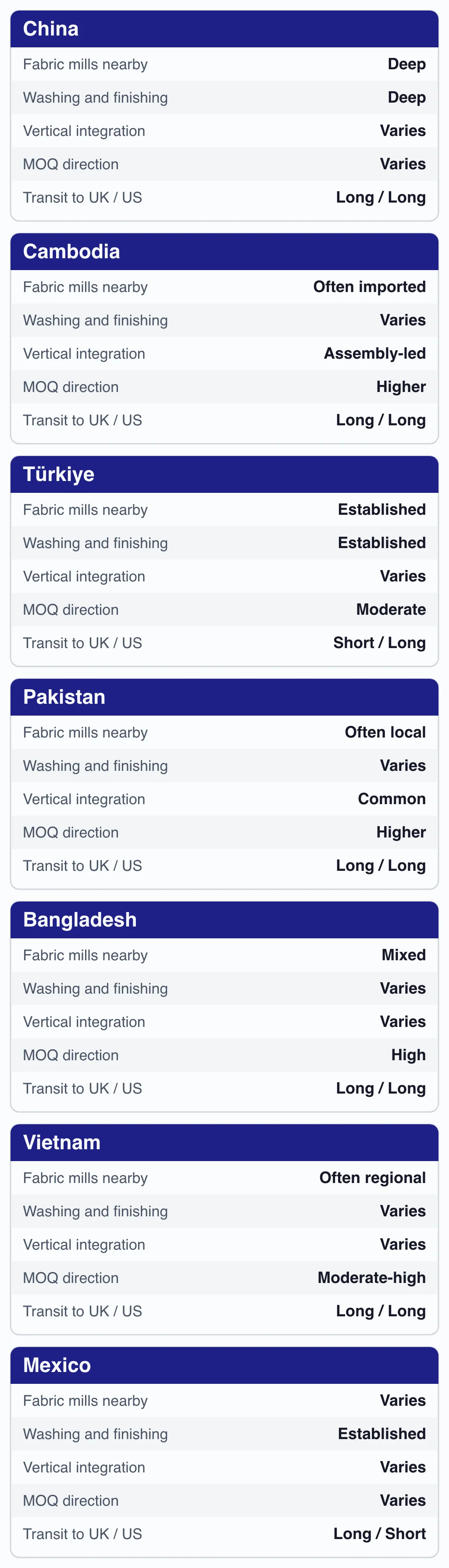
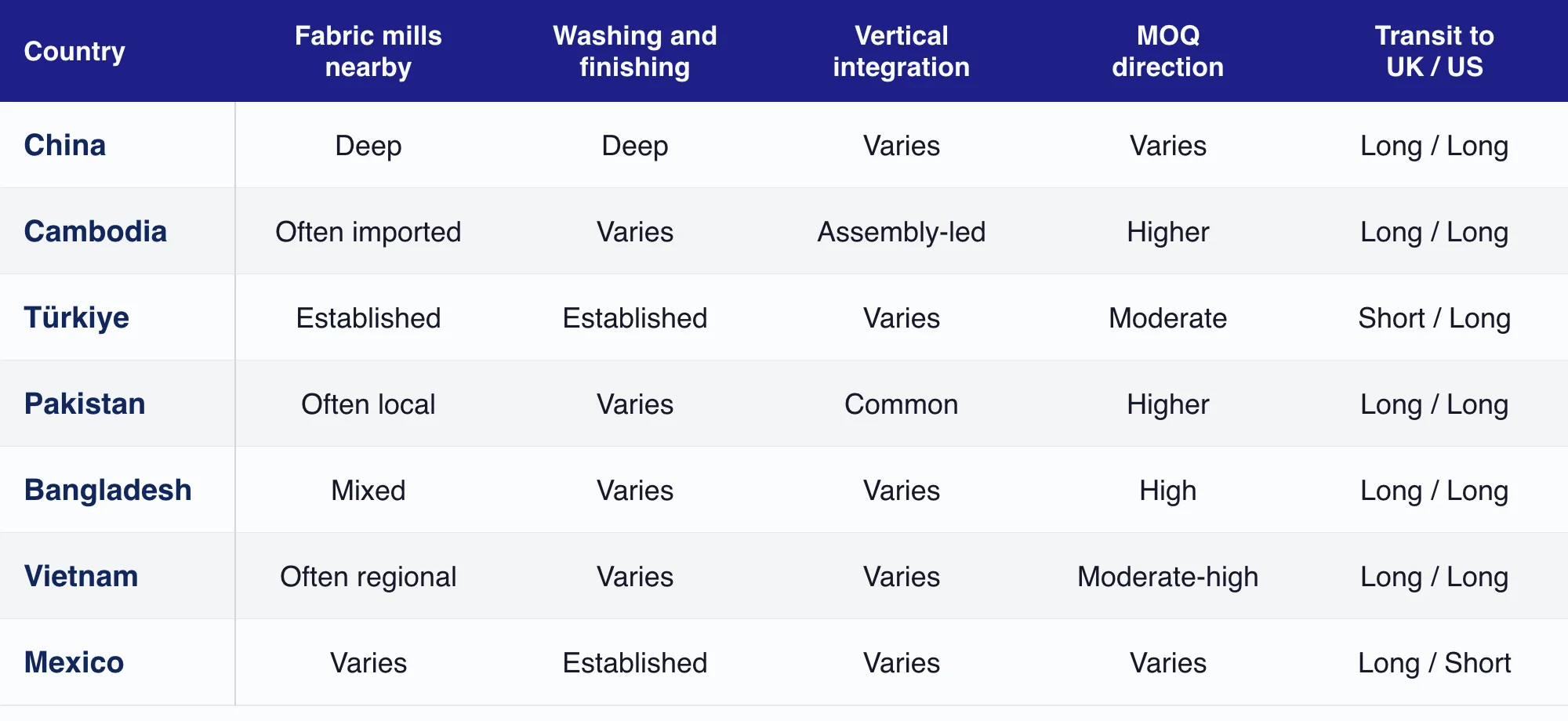
The profiles above explain each cell. Here is the same table in words:
- China: mills nearby: deep. Washing and finishing: deep. Vertical integration: varies. MOQ: varies. Transit to UK / US: long / long.
- Cambodia: mills nearby: often imported. Washing and finishing: varies. Vertical integration: assembly-led. MOQ: higher. Transit to UK / US: long / long.
- Türkiye: mills nearby: established. Washing and finishing: established. Vertical integration: varies. MOQ: moderate. Transit to UK / US: short / long.
- Pakistan: mills nearby: often local. Washing and finishing: varies. Vertical integration: common. MOQ: higher. Transit to UK / US: long / long.
- Bangladesh: mills nearby: mixed. Washing and finishing: varies. Vertical integration: varies. MOQ: high. Transit to UK / US: long / long.
- Vietnam: mills nearby: often regional. Washing and finishing: varies. Vertical integration: varies. MOQ: moderate to high. Transit to UK / US: long / long.
- Mexico: mills nearby: varies. Washing and finishing: established. Vertical integration: varies. MOQ: varies. Transit to UK / US: long / short.
Near your market or an Asian production base?
For many buyers the first cut is distance against depth of supply chain. Neither is better by default, so compare them on landed cost and calendar. FOB vs CIF vs DDP shows how to work out landed cost.

Near your market: Türkiye, Mexico
Short transit to one home market.
Best for
- Shorter transit
- Smaller or faster repeat drops
- Closer oversight


Trade-offs
- Unit cost and MOQ direction vary
- Each serves one market well: Türkiye for the UK and EU, Mexico for the US
Check
- The fabric source
- Whether it is local or imported

Asian production base: China, Cambodia, Bangladesh, Pakistan, Vietnam
Depth of supply chain, and a choice of origins.
Best for
- Fabric range (China)
- Capacity and volume
- A choice of origins
Trade-offs
- Long ocean transit to both the UK and the US
- Inbound fabric time in some countries
Check
- Where the fabric is woven
- The origin the goods will carry
Why trade rules and proof of origin now shape country choice
The duty a brand pays depends on the goods' country of origin, the destination market and the product code. It changes over time and differs between the UK and the US, so this page states no rates.
Country of origin usually follows where the garment is made, meaning cut and sewn, not where the fabric came from. Preferential schemes and trade agreements can have their own rules of origin, which may also look at fabric or yarn. Confirm the position with a customs broker.
Proof matters as much as place. Importers may be asked to evidence origin and the supply chain. That can mean commercial invoices, certificates or statements of origin and, in some cases, traceability back to fabric or cotton. A country choice you cannot document is a risk.
A country that weaves fabric locally can make origin and traceability simpler to document. A country that imports fabric needs a paper trail from the mill.
For official guidance, use gov.uk for the UK and U.S. Customs and Border Protection for the US. The “Duty and import rules” section of FOB vs CIF vs DDP shows how duty sits in a quote.
Questions to ask a denim factory, whichever country you choose
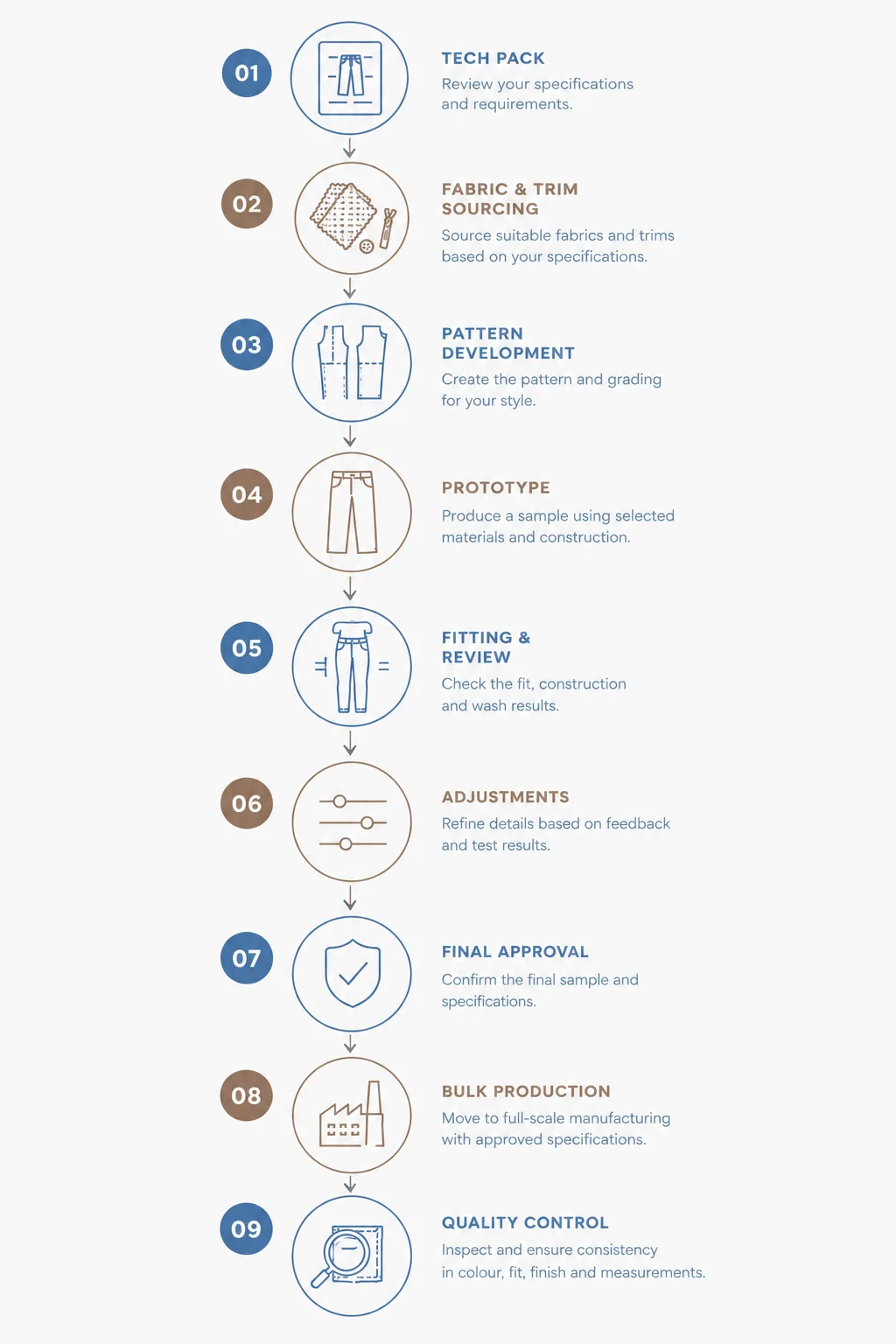
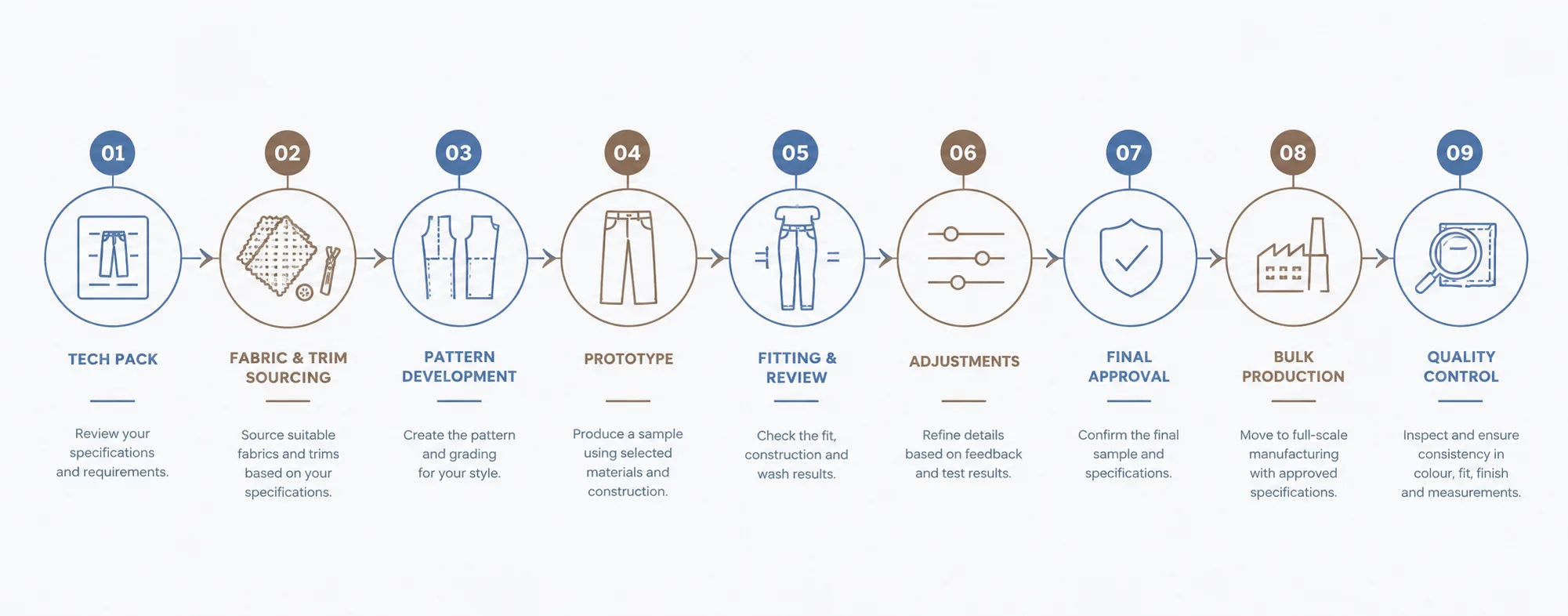
The production path from tech pack to quality control is the same everywhere. The diagram shows it. The questions below test how a given factory, in a given country, runs it.
- Where is the fabric woven, and how long does it take to reach the cutting floor?
- Is washing done in-house or at an outside laundry?
- Is the MOQ counted per style, per colour or per wash? See denim MOQ explained.
- What is the sampling time, and the bulk lead time after sample approval?
- What country of origin will the goods carry, and what documents prove it?
- Can you trace the fabric and cotton back to the mill if an importer asks?
- Which certificates does the site hold, and can they be verified? See denim factory certifications explained.
- Which Incoterm is the quote on, and from which port?
Send a tech pack so every country quotes the same spec. Read what is a denim tech pack to prepare one.
Where Top Mondial makes denim: China and Cambodia
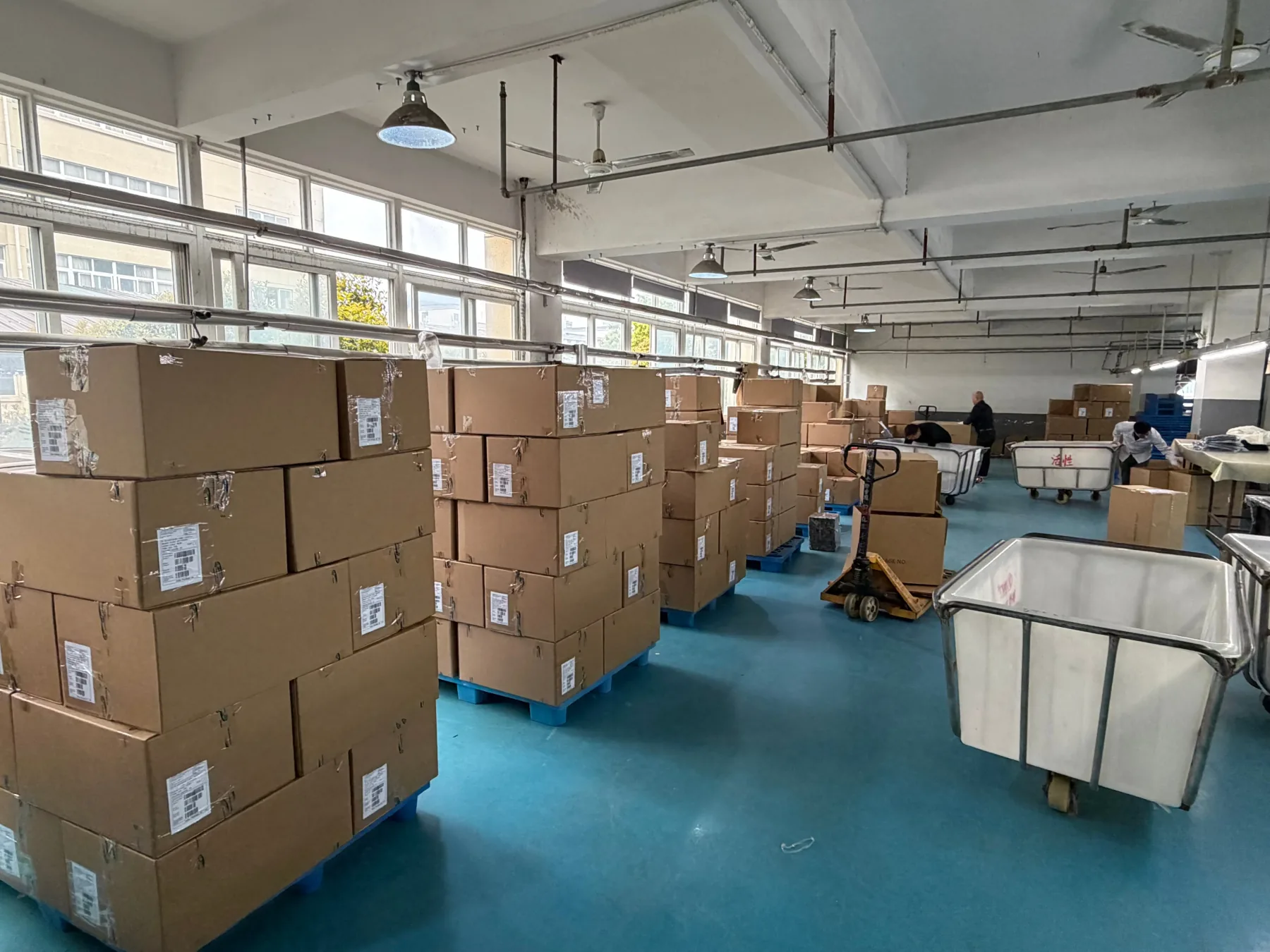
Top Mondial makes denim in two countries.
- China: one factory in Zhejiang (Changxing, Huzhou), open since 2003.
- Cambodia: two factories, in Kandal and Takeo provinces, from the 2022 expansion. The published reason is manufacturing capacity and supply-chain flexibility.
Across both countries we run three industrial parks covering 150,000 m², with 2,000+ skilled workers. The full lifecycle is in-house, including washing. We have laser, ozone and water treatment facilities, and long-term partnerships with 20+ fabric mills.
We offer OEM and ODM. MOQ is 500 pieces in China and 2,000 pieces in Cambodia. Average bulk lead time is about 30 days. That is a company figure, not a per-country one.
One limit: if near-shore transit to the UK or US is the deciding factor, Türkiye or Mexico may suit you better. We do not make denim there.
For the country detail, read China vs Cambodia denim manufacturing. Our factories page shows the sites, and how to choose a denim manufacturer covers the factory checks.
To enquire, send quantity, target market (UK or US), preferred origin if any, and a tech pack or reference garment.