Guide
Denim fabric weights explained:
how to choose the right weight for your product
Denim weight is the first fabric number a factory asks for. It decides how a garment drapes, how long it lasts, which washes work and roughly what it costs.
This guide has a denim weight chart by product. It then covers rigid vs stretch denim, selvedge vs standard denim, and recycled and certified fabric.
It ends with a fabric brief you can send to a factory with your swatch request.
What does denim weight (oz) mean?
Denim weight is the mass of the fabric over a set area. In the US it is quoted in ounces per square yard (oz/yd²), usually shortened to oz. Outside the US, mills also quote grams per square metre (g/m²).
1 oz/yd² is about 33.9 g/m², so 12 oz denim is about 407 g/m².
Weight is a property of the fabric, not the garment. A higher number means denser, thicker cloth. It gives more structure and takes longer to break in.
Mills usually quote weight before washing. Washing, shrinkage and finishing change the finished weight and the hand feel. State whether your spec is before or after wash.
Denim is usually grouped into three bands:
- Lightweight: under 12 oz
- Midweight: 12-16 oz
- Heavyweight: over 16 oz
Weight alone does not define a fabric. Composition, stretch and weave matter as much. The rest of this guide covers each one.
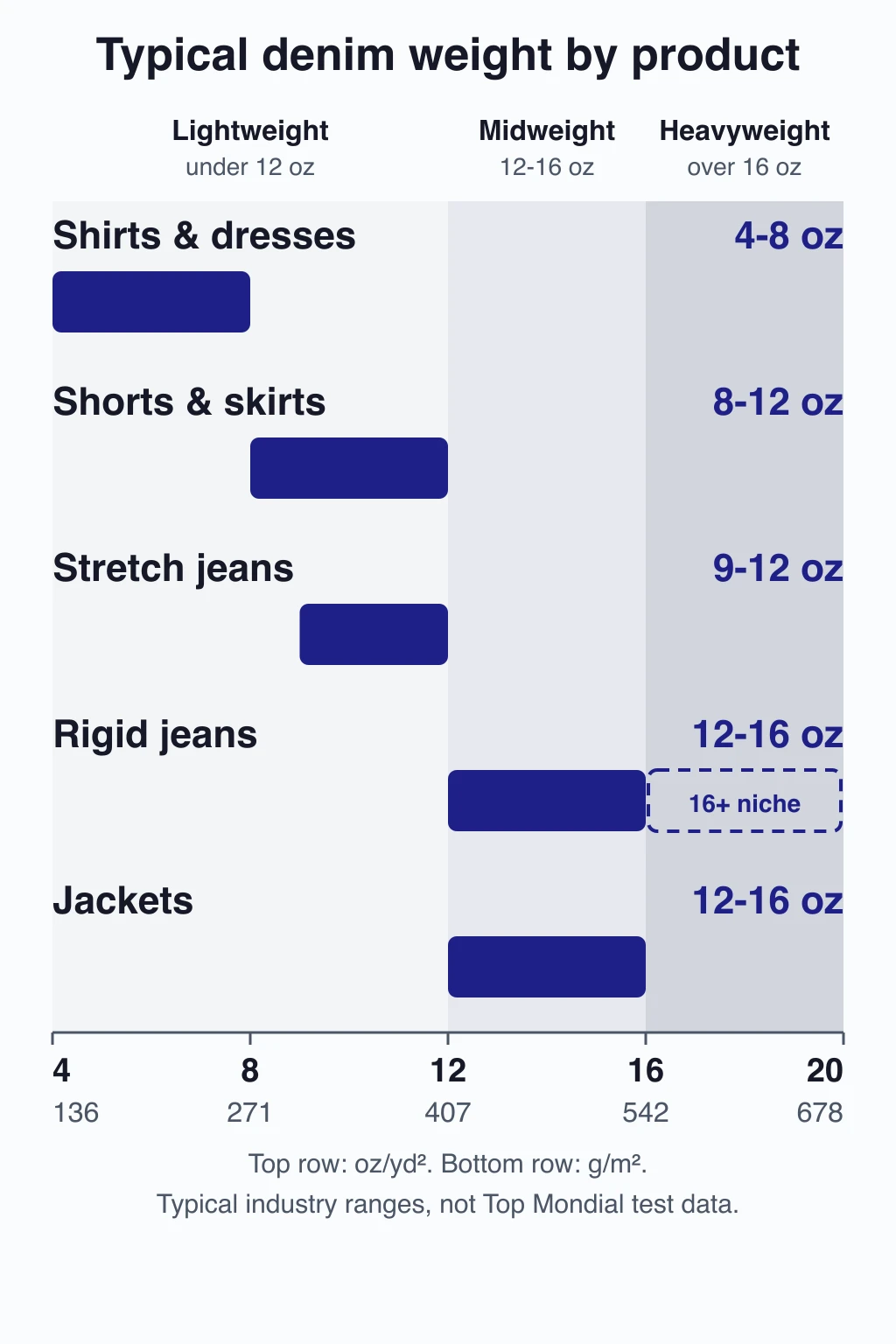
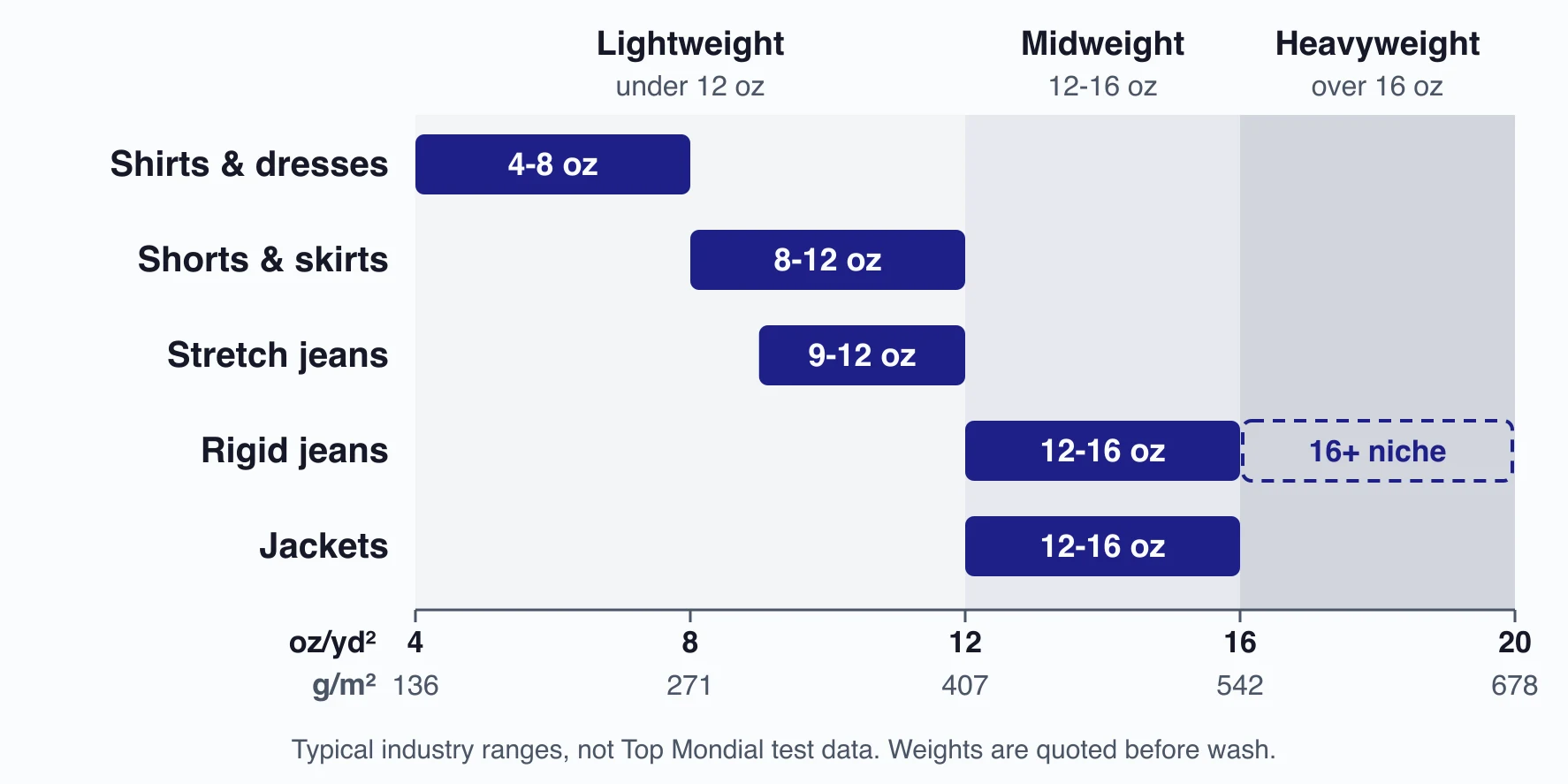
Denim weight chart: which weight for jeans, jackets, shirts and shorts
These are the typical ranges brands and mills work within. Your final choice depends on fit, season and wash.
- Shirts and dresses: about 4-8 oz. Light, drapes well, chambray-like handle.
- Shorts and skirts: about 8-12 oz.
- Stretch jeans: about 9-12 oz.
- Rigid jeans: about 12-16 oz. 16 oz and up is a niche heavyweight or raw-denim choice.
- Jackets: about 12-16 oz, for structure.
Choose lighter weights for warm climates and summer drops. Choose heavier weights for structure and longevity.
These are typical industry ranges, not Top Mondial test data.
Rigid vs comfort stretch vs stretch denim
Stretch comes from elastane (spandex) or other elastic fibres blended with cotton. The amount you use changes the fit, the shrinkage and how well the fabric recovers.
Rigid denim
Rigid denim is 100% cotton, or cotton with non-elastic fibres. It has little give.
- Holds its shape and moulds to the body over time
- Suits classic and heritage fits
- Needs the fit to be right in the pattern, because there is no stretch to forgive it
- Shrinkage needs testing, especially on raw or unwashed fabric
Comfort stretch
Comfort stretch has a small elastane content, commonly around 1-2%. It looks close to rigid denim but has some give.
It suits straight and relaxed fits that still need to be comfortable to wear all day.
Stretch and high stretch
Stretch denim has more elastane and is often a lighter weight. It suits skinny and slim fits.
Recovery is the key quality check. Recovery is how well the fabric springs back after it is stretched. Poor recovery leaves bags at the knees and seat.
Shrinkage and recovery: what to ask
Ask the mill or factory for shrinkage and recovery results on the fabric after your intended wash.
- Build the shrinkage into the pattern
- Test the bulk lot before cutting
- Check recovery on the washed fabric, not only the raw cloth
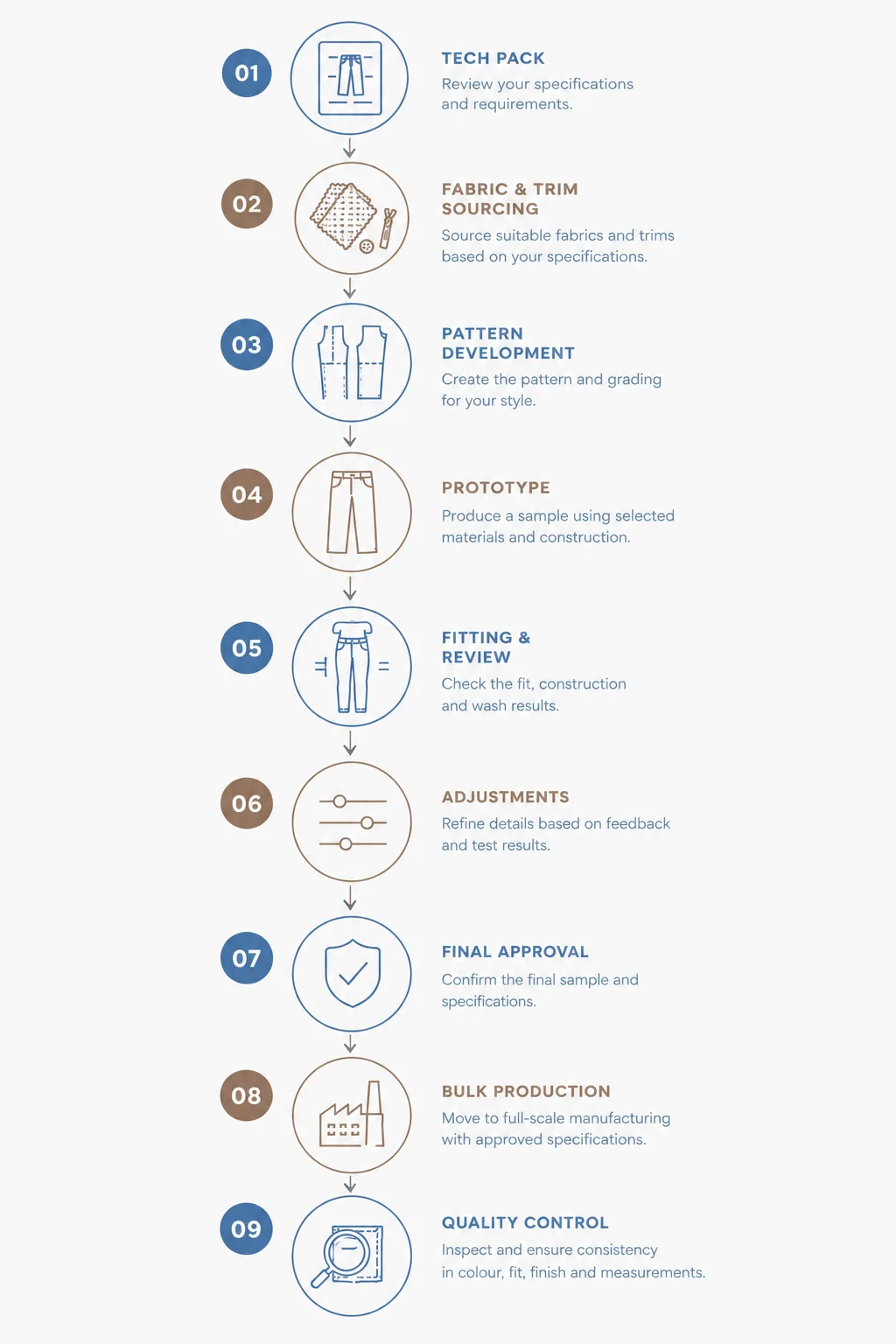
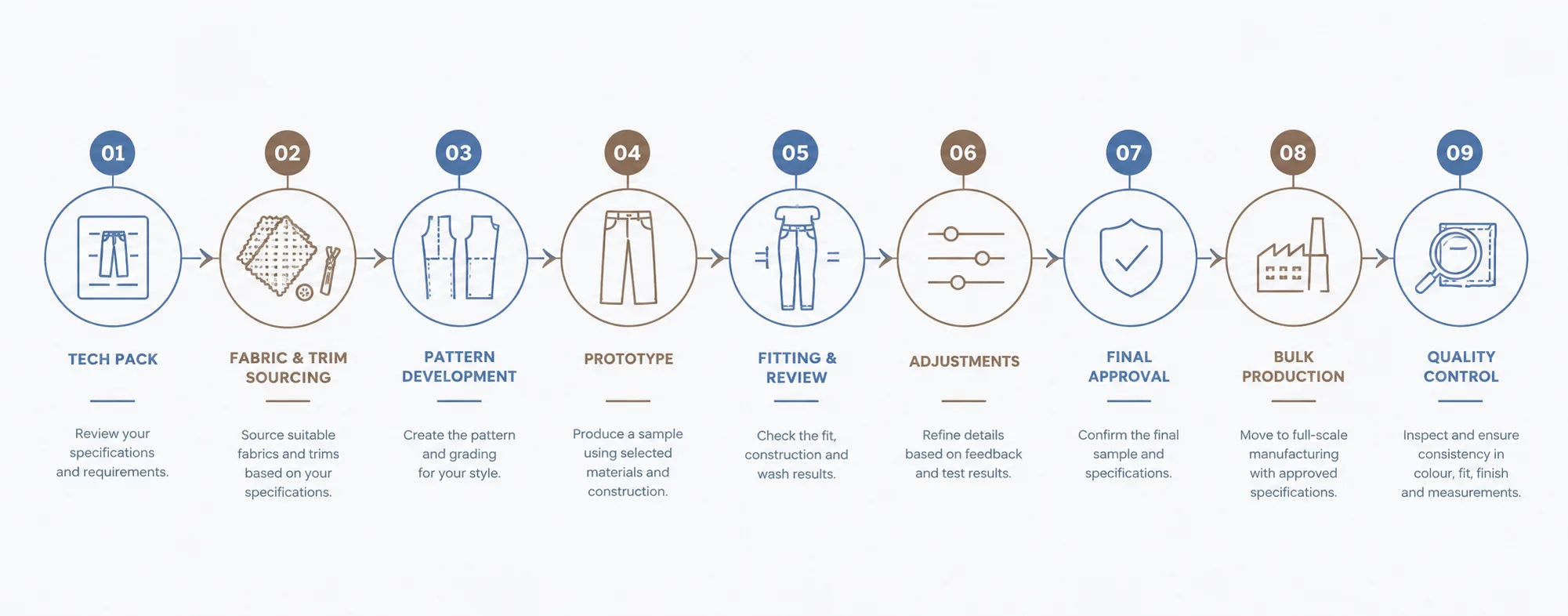
Our guide to how jeans are made shows where fabric testing sits in the process.
Denim shrinkage and stretch recovery covers the tests and the tech pack wording in full.
Selvedge vs standard denim
Selvedge is woven on narrow shuttle looms and finishes its own edge. Standard denim is woven on wider modern looms. Selvedge is a construction and aesthetic choice. It is not automatically better quality.

Selvedge denim
Narrow shuttle-loom fabric with a clean, self-finished edge. The edge is often shown at the outseam and the turned-up hem.
Good for
- Heritage and premium positioning
- Visible selvedge-ID detail on the outseam or cuff
- Raw and rinse looks


Trade-offs
- Narrower fabric uses more metres per garment, so it usually costs more
- Fewer stretch options
- A straight outseam is needed to show the edge, which limits pattern shapes

Standard denim
Wider fabric from modern wide looms. It is the default for most jeans.
Good for
- Efficient cutting and usually a lower cost
- The widest choice of weights, stretch levels and finishes
- Consistent supply for repeat orders
Trade-offs
- No self-edge detail
- Less of a heritage story on its own
Cotton, recycled content and certified denim
Most denim is cotton-based. Blends add elastane for stretch, or other fibres for performance. Put the composition on the fabric spec and the care label.
Recycled content, such as recycled cotton or recycled polyester, is a fabric choice. If you want to make a claim on the label or your website, it also needs documentation.
Recycled and organic claim standards (GRS, RCS and OCS) work by certifying each stage of the supply chain. The fabric mill and the garment factory both need to be certified for the claim to carry through to the finished garment.
Top Mondial holds these certifications:
- Global Recycled Standard
- Recycled Claim Standard 100 and Blended
- Organic Content Standard 100 and Blended
Tell the factory up front if you need a certified claim. Then certified fabric can be sourced and the paperwork planned from the start.
Recycled fibre can change the hand feel and the wash behaviour. Sample it before you commit.
How fabric choice affects washing, finishing and cost
Fabric and wash are developed together. The fabric limits which finishes will work, and it affects cost.
Weight
Heavier fabric withstands abrasion and heavy distressing better. It also gives more contrast on fades.
Very light fabric limits aggressive grinding and destroy effects. Heavier fabric uses more cotton, so cost rises with weight.
Stretch
Elastane can be damaged by harsh chemical and heat treatments. Very aggressive bleach or abrasion may need adjusting on high-stretch fabric.
Always check recovery after the wash.
Rigid, raw and selvedge
These fabrics suit raw, rinse and lighter washes that show off the cloth. Selvedge is narrower and comes from specialist supply, so it usually costs more.
Recycled and certified fabric
Recycled and certified fabric may cost more and adds certification paperwork. Wash results can differ from virgin cotton, so approve it on a washed sample.
Dye and shade
The depth and cast of the indigo decide how far a wash can go. Ask for washed swatches, not only raw ones.
For wash types and what each one does, read our guide to custom denim washes. Top Mondial develops washes in-house and runs laser and ozone finishing.
How to ask a factory for denim swatches and what to check
Send the factory the product, your target weight (before or after wash), the composition and stretch level, the colour and cast, and your preferred construction: rigid, stretch or selvedge. Add any need for certified content, and your target market and price position. Ask for several options around your target weight rather than one.
Each swatch should come with the mill reference, weight, composition and width, plus stretch and recovery figures where available. Ask for a washed version in or near your target wash.
When the swatches arrive, check:
- Weight and thickness against your spec
- Hand feel, raw and after wash
- Stretch and recovery: stretch it, release it and look for bagging
- Colour, cast and the backside of the fabric
- How it takes your wash
- Shrinkage information
- Certificates for any recycled or organic claim
Keep the approved swatch reference. It becomes the fabric standard for sampling and bulk.
To see how a swatch leads to a first sample and a wash approval, read our guide to denim sampling.
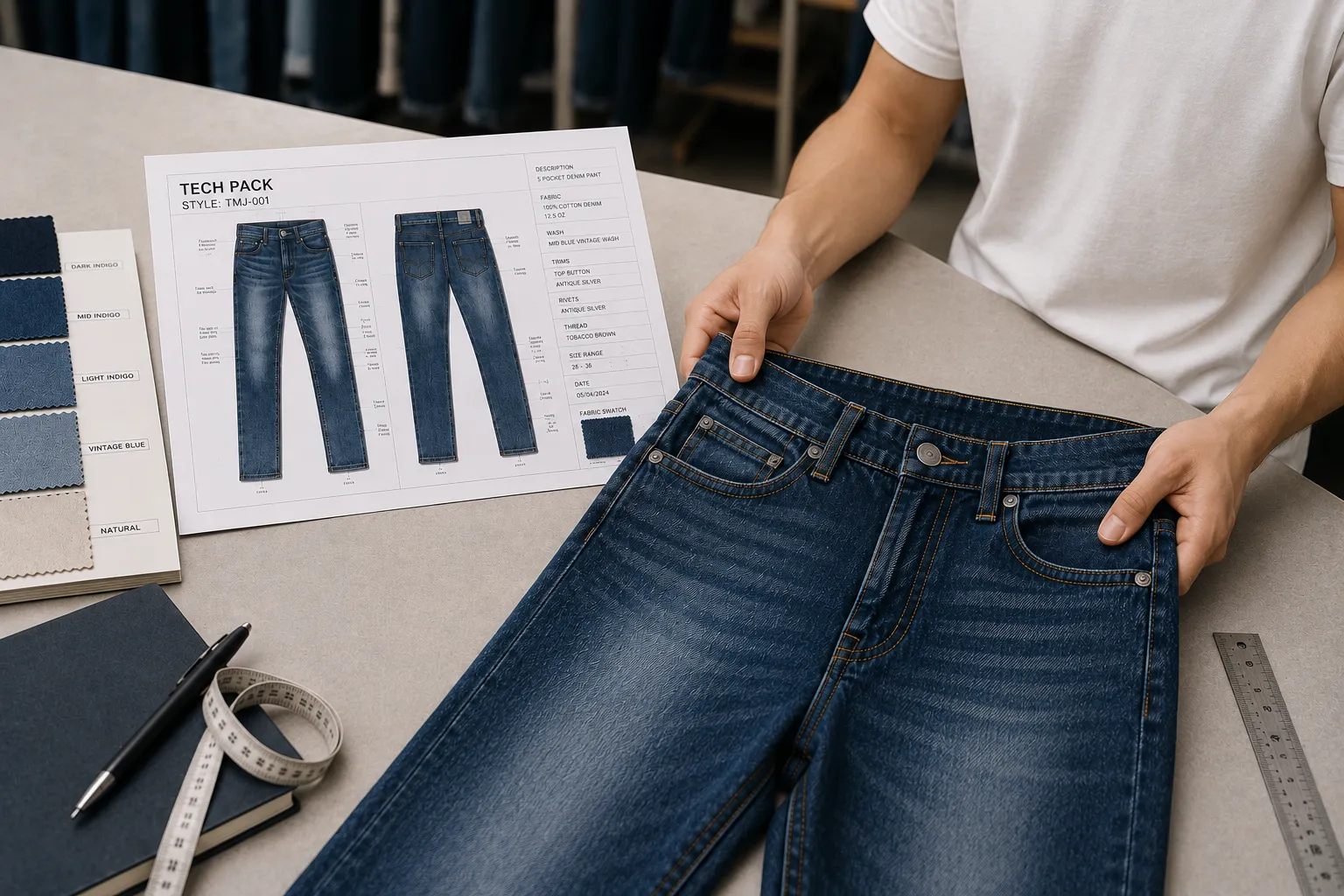
How to brief a factory on denim fabric
Everything above condenses into the fabric section of your tech pack. Copy this list into your brief:
- Product and fit
- Weight (oz or g/m², before or after wash)
- Composition, including the elastane percentage
- Construction: rigid, comfort stretch or stretch; selvedge or standard
- Colour and cast
- Target wash
- Certified content needed: yes or no, and which standard
- Reference swatch or garment
If you do not know some of these yet, share the product, your target market and a reference garment. Ask the factory to propose options.
The fabric spec feeds the tech pack review at the start of the process. See what goes in a denim tech pack for the fabric specification part, and denim sampling for what happens next.
Denim fabric sourcing at Top Mondial
Top Mondial has a dedicated fabric sourcing department and long-term partnerships with more than 20 fabric mills.
We source rigid, stretch, selvedge and performance blends, with access to certified and sustainable material options. We develop washes in-house, so fabric and wash are approved together.
OEM brands specify their own fabric. ODM brands choose from the factory's options. Our guide to OEM vs ODM denim manufacturing explains the difference.
Developing a sample and shipping it to you typically takes around 7 days, depending on the design, the fabric and your location.
Share your product, fabric preference and quantity, and we will propose options to sample.