Guide
How jeans are manufactured:
a step-by-step guide for brands
Jeans are made in a fixed sequence: fabric and trims, pattern and marker, cutting, sewing, washing and finishing, finishing touches, quality control, then packing and shipping.
For a brand, the sequence matters because it sets when you sign off: tech pack, sample, wash, pre-production sample, then inline and final inspection.
This guide follows a bulk order through each stage so you know what to prepare before contacting a manufacturer.
How are jeans manufactured? The process at a glance
A bulk denim order has two phases. Development fixes what is being made: the tech pack, sampling and wash approval. Production then makes it at volume.
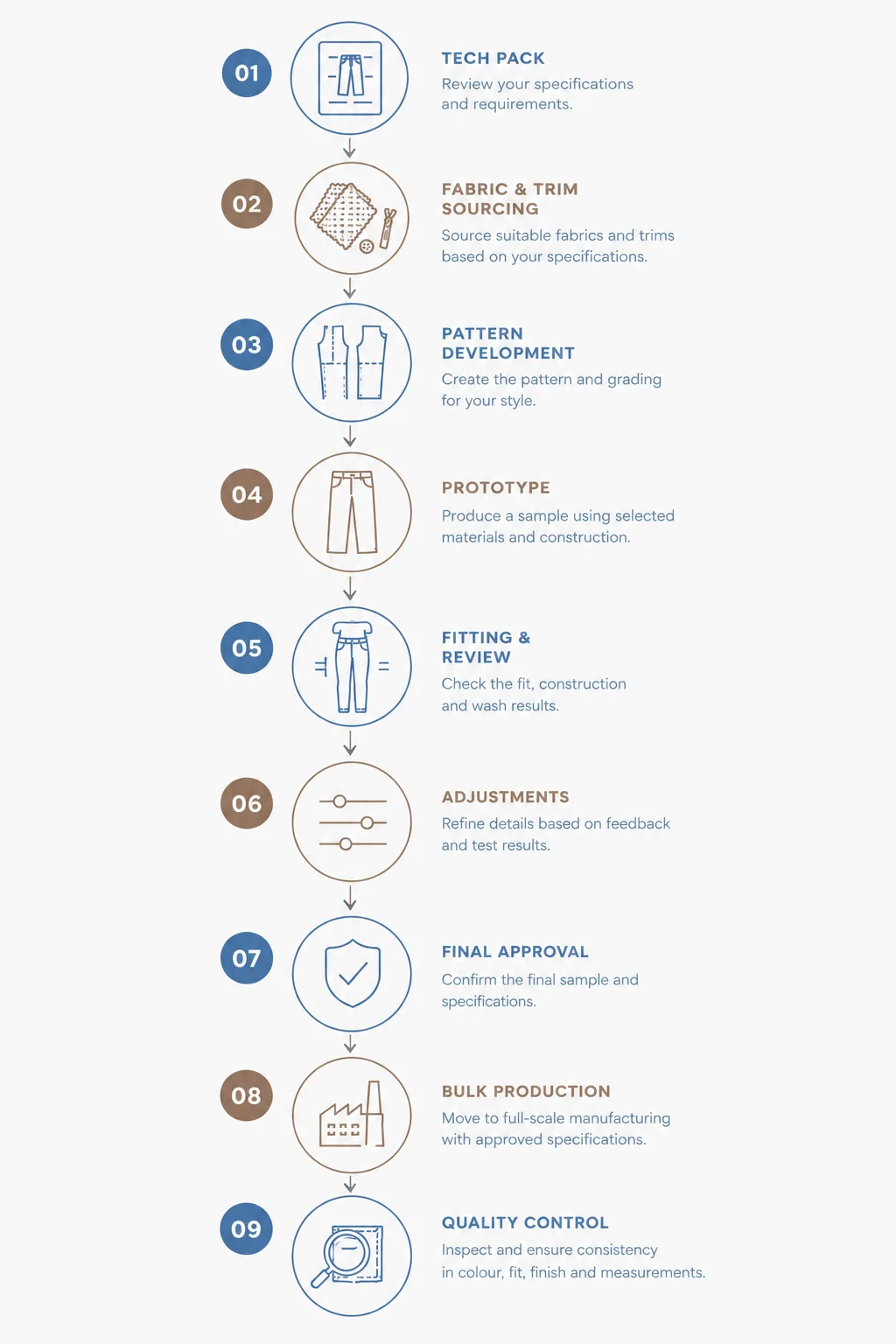
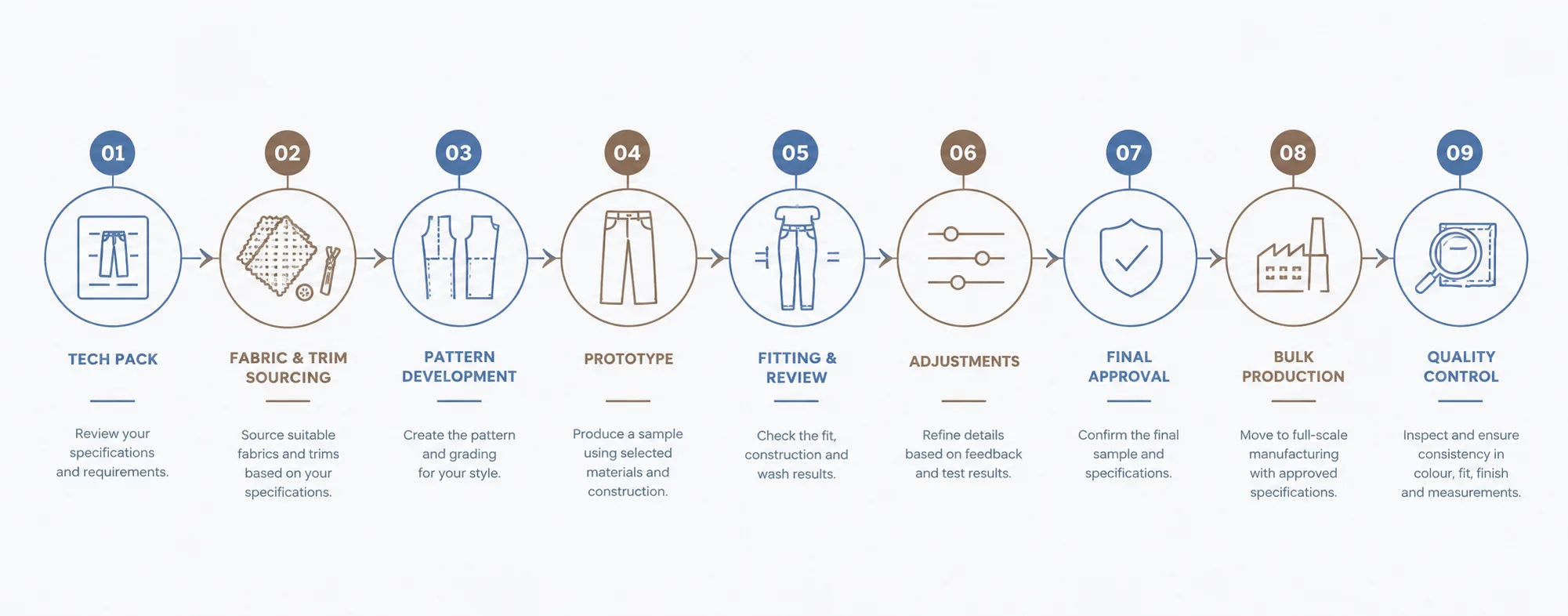
The jeans manufacturing process has eight production stages: fabric and trims, pattern and marker, cutting, sewing, washing and finishing, finishing touches, quality control, and packing and shipping. The diagram above shows the wider journey from tech pack review to quality control. The stages below cover each production step in turn.
Most of your decisions come at the start: specs, samples and the wash. Later, the factory checks the goods against what you approved.
What to prepare before bulk production starts
Bulk production starts from four things you prepare and approve.
- A tech pack. It is the reference for fit, fabric, construction, hardware, wash and packaging. See a denim tech pack for what goes in one.
- An approved sample. A development sample is made, then reviewed for fit and refined until it is signed off. Our denim sampling process guide covers the detail.
- An approved wash. The wash is developed on your chosen fabric and approved before bulk.
- A pre-production (PP) sample. It is made in the bulk fabric and trims. It confirms that the approved spec carries into production.
Once a sample is approved, the specifications are locked into the tech pack that governs the full production run.
So how do you get jeans manufactured? Prepare a tech pack or a reference garment, approve a sample, then place a bulk order.
The 8 stages of jeans manufacturing
Each stage below follows a bulk denim order from fabric to shipment, with what the brand needs to know at that point.
1. Fabric and trims
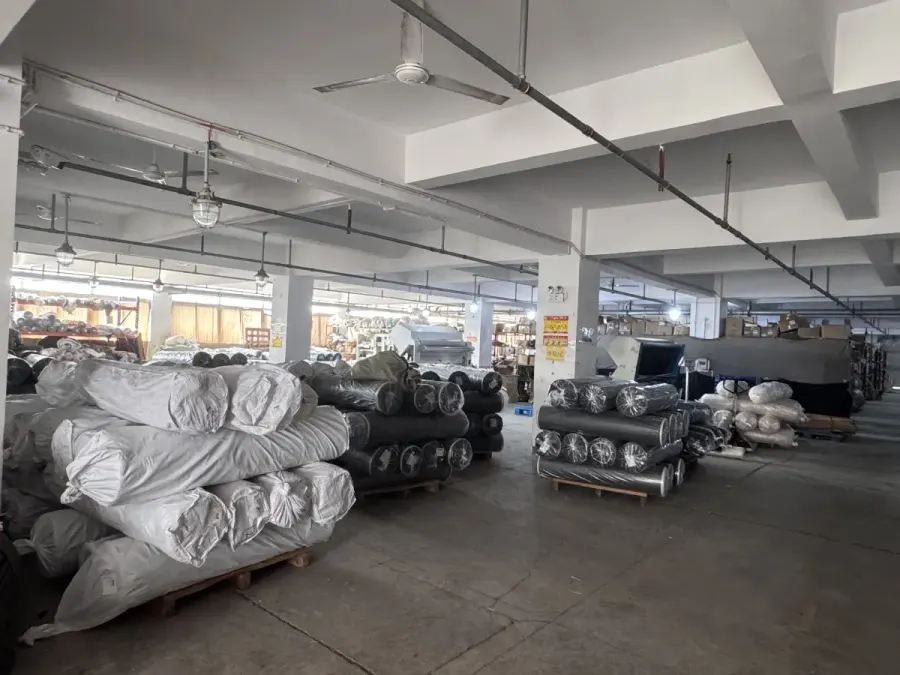
Bulk fabric is sourced to the approved spec: composition, weight and stretch. Trims are sourced at the same time: buttons, rivets, zips and labels.
Fabric lots can vary in shade and shrinkage, so they are checked before cutting. Top Mondial has a dedicated fabric sourcing department and long-term partnerships with more than 20 fabric mills.
- Composition, weight and stretch match the approved sample
- Trims are sourced to the tech pack
- Each fabric lot is checked on arrival


2. Pattern and marker
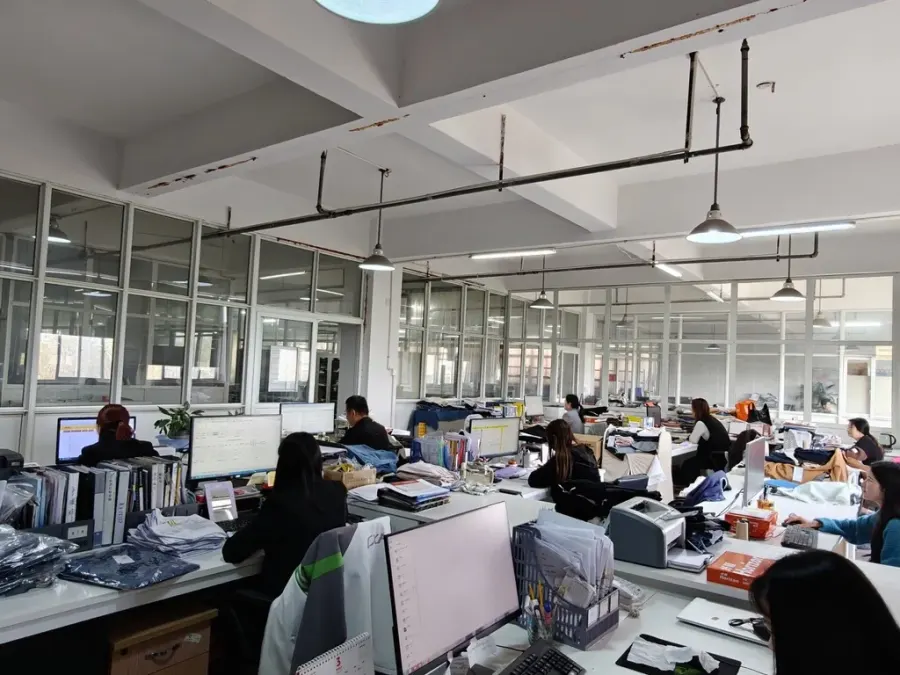
The approved pattern is graded across the size range. A marker then lays every pattern piece onto the fabric width so that as little material as possible is wasted. Top Mondial plans markers in CAD to keep fabric waste down.
Patterns allow for wash shrinkage. That is how the finished garment measures to spec after washing.
- Pattern graded across all sizes
- Marker built to use the fabric width efficiently
- Shrinkage allowance built into the pattern
3. Cutting
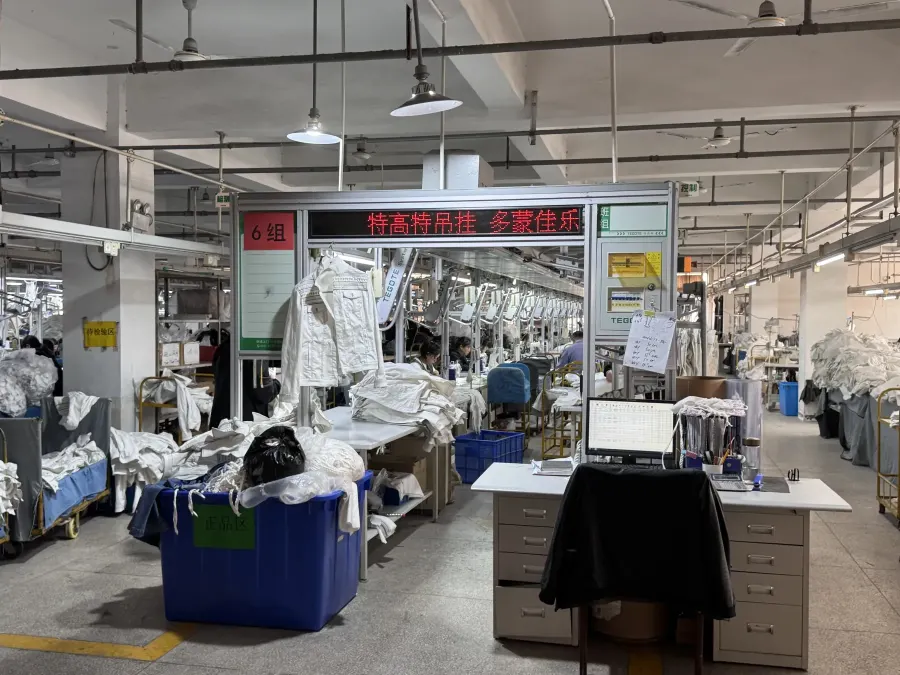
Fabric is spread in layers and cut to the marker. Pieces are bundled by size, and by fabric lot where relevant, so that shades do not mix inside one garment.
Any error here carries through every later stage, so spreading and cutting are done precisely.
- Fabric spread flat and in layers
- Pieces cut to the marker
- Bundles kept within one fabric lot
4. Sewing
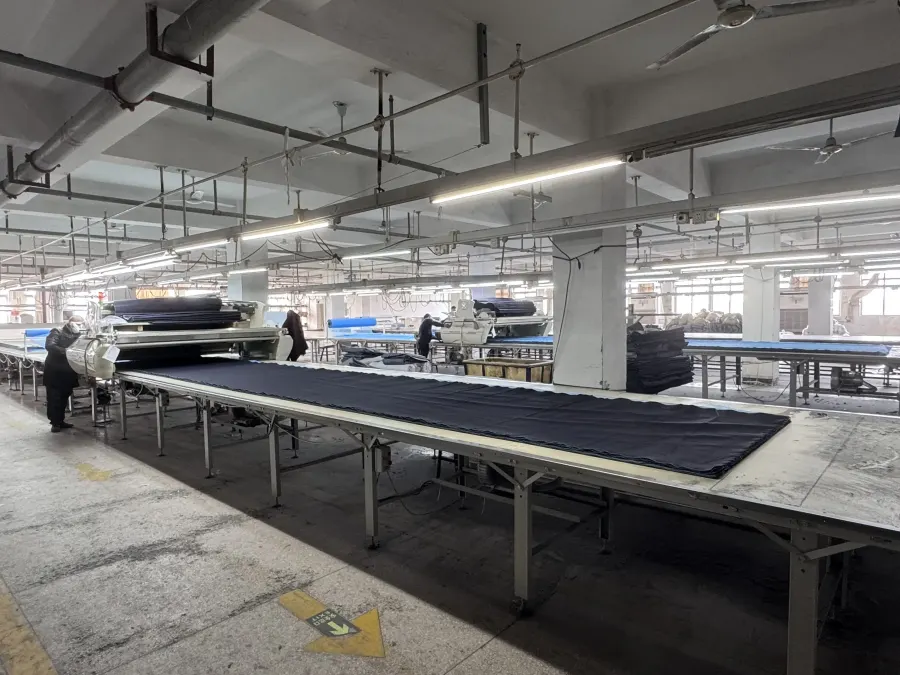
Cut panels are assembled on a sewing line. Operators work through the pockets, fly, yoke, side seams, inseam, waistband, belt loops and hems.
Denim needs strong seams and consistent stitching. Inline checks on the line control stitch consistency and workmanship while the garments are still being made.
- Pockets, fly and yoke first, then the main seams
- Waistband, belt loops and hems last
- Inline inspection during sewing
5. Washing and finishing
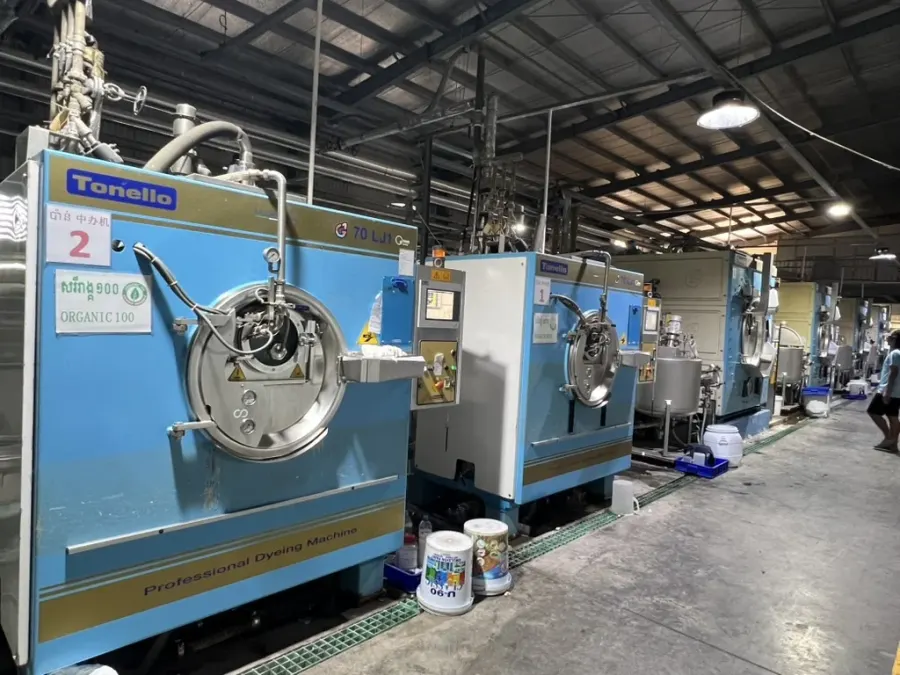
Garments are washed after sewing. The wash sets the final colour, fade, hand feel and size. This is the stage where the approved wash standard is matched on bulk fabric.
Laser and ozone treatment also happen at this stage, covered further down. For the full range of wash types, see custom denim washes.
- Wash matched to the approved standard
- Colour, fade and hand feel set here
- Laser and ozone used where specified
6. Finishing touches
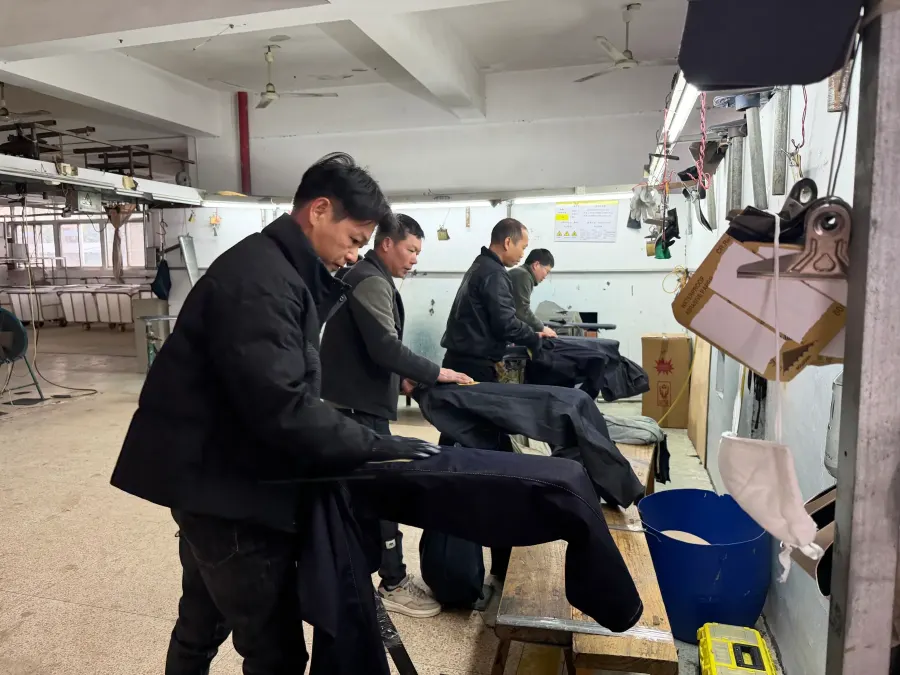
After washing, the garment is completed. Hardware such as buttons and rivets may be applied at this point. Labels go on, thread ends are trimmed and the jeans are pressed.
Where the design calls for it, embroidery and hand-finishing are added. Top Mondial does both in house, and prepares labels, hangtags and retail-ready packing to your requirements.
- Hardware, where applied after washing
- Labels, hangtags and embroidery
- Thread trimming and pressing
7. Quality control
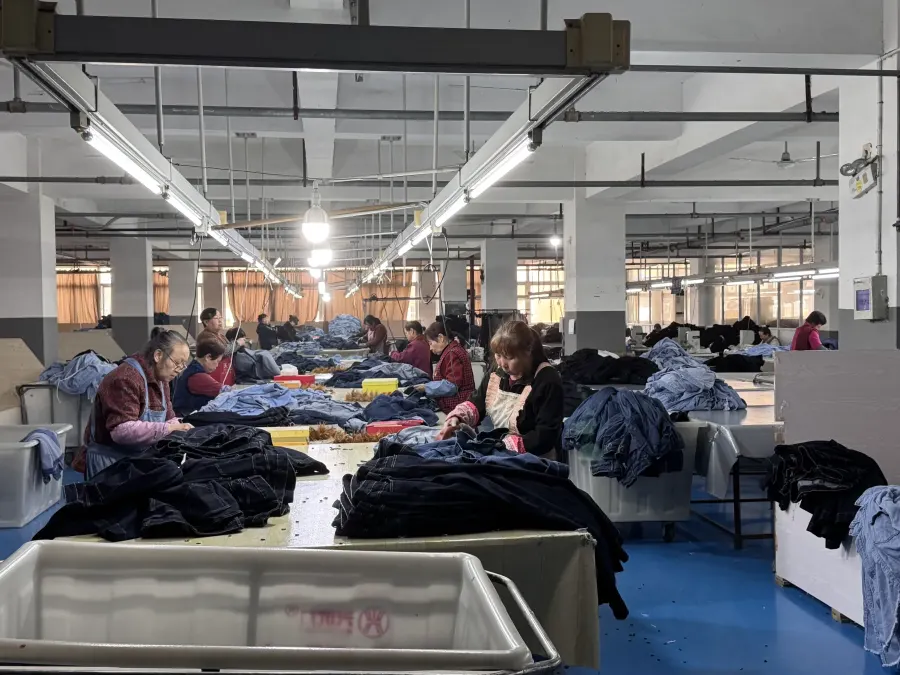
Quality control checks measurements against tolerances, shade, stitching, wash consistency and defects. Inline checks during production lead into a final inspection before packing.
Top Mondial runs multi-stage inline and end-of-line inspections, and each order undergoes a final audit before dispatch. Third-party inspection support is also available if you want an independent check.
- Measurements checked against tolerances
- Shade, stitching and wash consistency checked
- Final audit before dispatch
8. Packing and shipping
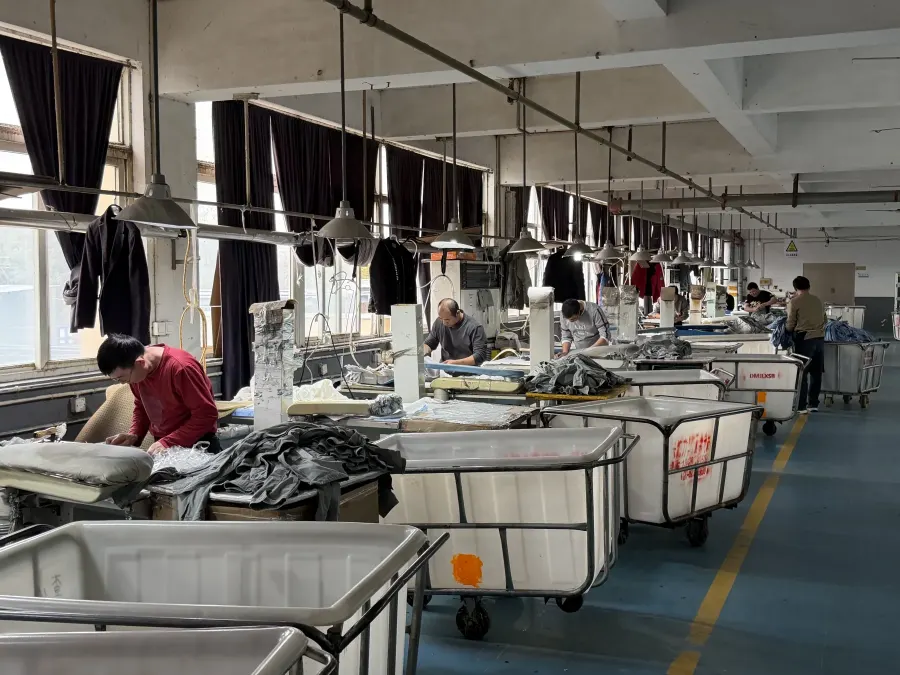
Garments are folded or hung, tagged and cartoned to your packing instructions. Orders are sorted and prepared for shipment.
Top Mondial also offers in-house storage and inventory coordination.
- Folded or hung, as you specify
- Cartons sorted and labelled
- Storage and inventory coordination available
Where your brand signs off during jeans manufacturing
Each approval becomes the reference that the next stage is checked against.
- Tech pack: the spec everything is built from.
- Sample sign-off: fit, construction and fabric.
- Wash approval: colour, fade and hand feel on the bulk fabric.
- Pre-production sample: bulk materials made to the final spec.
- Inline inspection: problems caught while sewing and washing are still under way.
- Final inspection: the finished goods checked against the approved sample before shipment.
Changes after sign-off are the most common source of rework. Settle them before you approve, not after.
Which stages cause the most delays and defects?
Most problems in a jeans order trace back to four places.
1. Wash approval
Custom washes often take several rounds. The same wash reacts differently on different fabrics. Approving late, or changing the fabric after the wash is approved, pushes back the start of bulk production.
2. Shrinkage
Washing shrinks denim, and the amount depends on the fabric and the wash. If the pattern does not allow for it, finished measurements fall outside tolerance.
The fix is to test shrinkage on the bulk fabric and the approved wash before cutting.
3. Fabric lot variation
Different dye lots of the same fabric can differ in shade and shrinkage. Lots are checked on arrival, cutting is kept within a lot, and wash results are compared against the approved standard.
4. Late changes
Changing the spec after the pre-production sample means re-sampling. Keep your tech pack and sample comments in one current version. Our guide to common sampling mistakes covers how to avoid this.
Where laser finishing, ozone and water treatment fit in
All three sit in stage 5, washing and finishing. They come after sewing and before the finishing touches.
Laser finishing creates fading, whiskers, patterns and distressing directly on the denim. It is digitally controlled, so effects are detailed and repeatable. It can reduce the need for some manual abrasion.
Ozone treatment reduces indigo for controlled fading. It can help reduce water and chemical use compared with some conventional wet-processing methods.
Water treatment is handled by our eco-friendly water treatment facilities, alongside the laser machines and ozone systems.
For the full list of wash types and techniques, read our guide to types of denim washes and finishing techniques.
How long does it take to manufacture jeans?
1. Sampling time
It typically takes around 7 days to develop a sample and ship it to you. This varies with the design, fabric sourcing, development requirements and your location. More sampling rounds add time.
2. Bulk production time
Our average bulk lead time is around 30 days. It depends on order size, product complexity and material availability.
3. What moves the timeline
Three things move it most: the number of wash approval rounds, fabric availability and changes after sign-off. These are the same issues described under delays and defects above.
How Top Mondial manufactures jeans
Top Mondial runs its own factories: one in Zhejiang, China, and two in Cambodia. The full lifecycle is handled in house, from design, cutting and sewing to embroidery, hand finishing, washing and final logistics.
We support you from sampling, fabric sourcing and wash development through to bulk manufacturing.
Whatever manufacturer you pick, check the same things; our guide on how to choose a denim manufacturer lists them. When you are ready, send us a tech pack or a reference garment to start.